
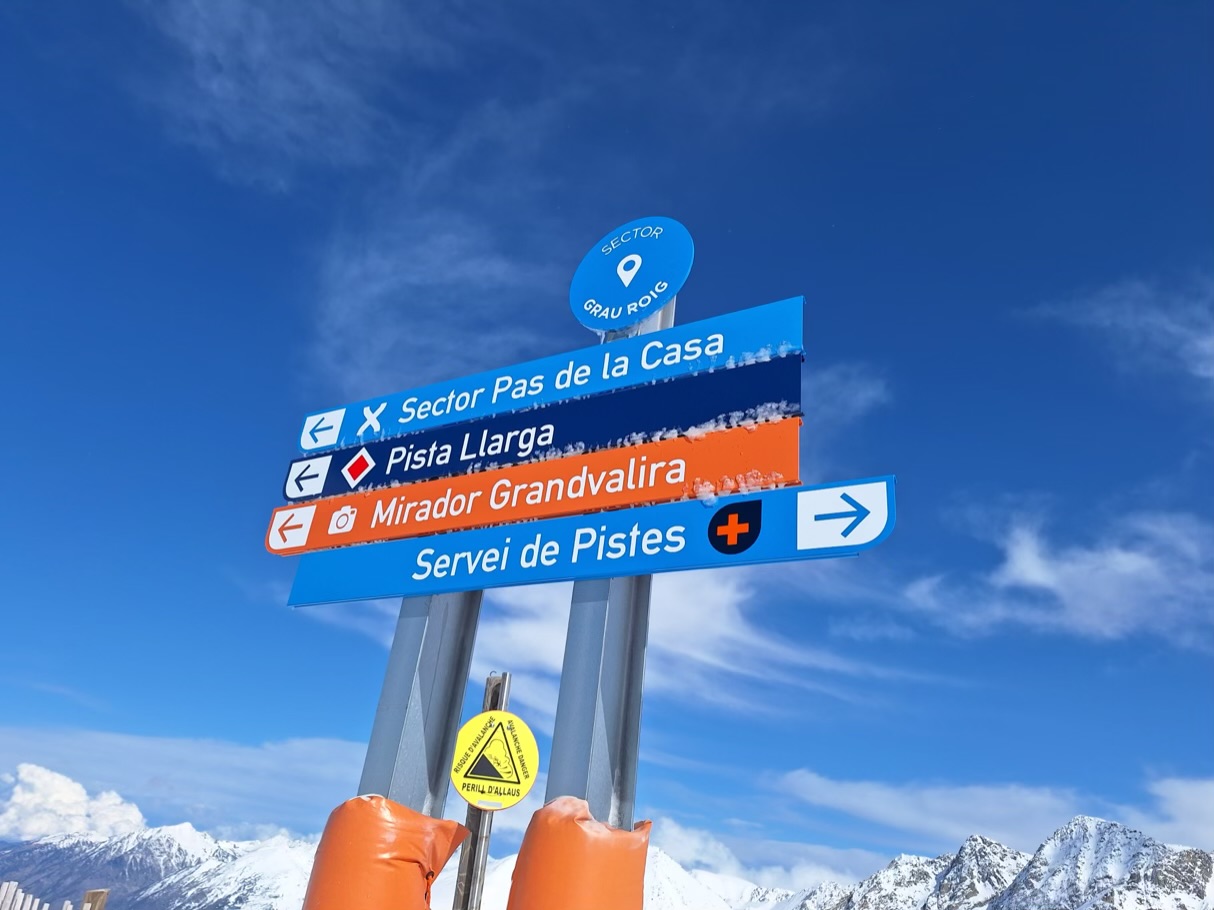
If you’re looking for your next ski holiday, you’ve probably come across Grandvalira, a large resort in the Pyrenees of Andorra. When I first saw how affordable it was, I was skeptical—could it really compare to the Alps? After all, Andorra isn’t exactly a destination that gets a lot of attention. In fact, many people don’t even realize it’s its own country, separate from Spain. With so little buzz around it, deciding to book a ski trip there can feel like a leap of faith.
This Grandvalira review will give you everything you need to know before making that decision. Having skied in the Austrian, French, and Italian Alps, as well as in Finland, Poland, and Slovakia, I can offer a well-rounded perspective on what it’s like to ski in Andorra’s largest resort. For more details on skiing in Andorra, check out my guide to skiing in Andorra. Keep reading for a breakdown of everything you need to know.
Quick Stats: Grandvalira Ski Resort
📍 Location: Andorra, Pyrenees
⛰️ Altitude: 1,710 m – 2,640 m
🎿 Pistes: 215 km total (largest ski resort in the Pyrenees)
23 green🟢 | 53 blue🔵 | 43 red 🔴 | 19 black ⚫
🚡 Lifts: 74 total (Opening hours 9am – 5pm)
5 cable cars | 29 chairlifts | 40 tow lifts
🔗 Connected Sectors: 7
Pas de la Casa, Grau Roig, Soldeu, El Tarter, Canillo, Encamp, Peretol
🏂 Snowparks: 3
⛷️ Freeride Areas: Several off-piste zones, especially in Grau Roig and Encamp
Grandvalira Ski Resort Review: The Experience
Pistes & Terrain – 9/10

Grandvalira offers fantastic pistes: wide, well-connected, and rarely crowded, giving you plenty of space to ski comfortably. My favorites were the wide, straight runs in Grau Roig and Pas de la Casa, like Directa I and Directa II. The resort excels in offering a great mix of green, blue, red, and black runs, making it ideal for groups with varying skill levels.
For those who enjoy narrower, forested routes, Soldeu and El Tarter are perfect, as they’re at a lower altitude. These areas also feature some of the best black runs, like Eslalom and Aliga. If you’re looking for a hidden gem, Montamuls offers a short, fun red run with great turns. The only downside is that you need to take a tow lift to get up there. To explore all the pistes in Grandvalira, check out the piste map.
I deducted one point because some of the black pistes, particularly in Pas de la Casa, weren’t always groomed—something you’d expect more in the French Alps. Without fresh snow, these runs became bumpy, which is a shame since they were otherwise really nice.
Towns & Après-Ski – 8/10
Grandvalira is famous for its après-ski scene. Although I spent more time on the slopes than in the bars, the music starting around 3 PM in the bars on the slopes is impossible to miss. One popular spot is Coll Blanc, known as “UFO” due to its unique shape. Located at the top of the mountain connecting Pas de la Casa and Grau Roig, it’s where skiers gather at the end of the day. At lift closing time, you’ll often see people skiing back down, and once, we even saw a group skiing in swimsuits! If you’re looking for fun, you definitely won’t be disappointed.

As for the towns, they’re more practical than picturesque. Pas de la Casa, where we stayed, is a compact, densely populated area filled with hotels, restaurants, and bars. While it may lack the charm of Alpine towns, it offers great convenience. Most hotels are just a few minutes’ walk from the slopes, and everything you need is right at your doorstep. After a long day on the mountain, it’s pretty appealing not to have to go far for essentials.
One thing worth noting about Pas de la Casa is that buses can’t go into the town center. If you’re arriving by bus, you’ll need to walk up from the large bus stop at the base of the town. It’s a bit inconvenient, but we didn’t mind since our luggage was transported separately by mini-buses.
Overall, I rated Towns & Après-Ski 8/10. It’s practical and convenient, but it lacks the magical, picturesque vibe you often find in ski towns in other parts of Europe.
Piste Infrastructure – 7/10
The piste infrastructure at Grandvalira is decent, though not outstanding. Most of the restaurants are concentrated at the base of the slopes, with only a handful of options higher up—these do offer better views, but they’re fewer and more basic compared to what you’d typically find in Alpine resorts. When it comes to food, the selection is fairly limited. Many spots mainly serve sandwiches or burgers, which can get repetitive. That said, Grandvalira’s ski pass with a lunch option can be a good value if you’re okay with the limited menu. There are a few restaurants offering more varied dishes, but they tend to be quite pricey, so we didn’t eat at those often.
Toilet facilities are also somewhat limited and, like the restaurants, mostly found at the bottom of the slopes. This can be inconvenient if you’re spending most of your day higher up. Overall, the on-slope amenities aren’t exceptional, but they’re functional enough for a good day on the mountain.
Snow Conditions – 9/10
Overall, Grandvalira is a snow-sure resort, largely thanks to its high-altitude location. This is especially true if you’re staying in one of the higher towns, such as Pas de la Casa, which sits at 2,000 meters above sea level. Despite its southerly location, the resort offers reliable snow conditions throughout the season, which typically runs from December to April.
Lifts – 6/10

The lift system was the biggest disappointment for me in Grandvalira. There are very few cable cars, and the ones that do exist are short, somewhat dated, and mostly concentrated around Soldeu and El Tarter. In Pas de la Casa, there’s only a single, very short cable car primarily used by the ski school to transport beginners to the learning area.
Chairlifts are by far the most common type of lift in the resort. While that would generally be fine, many of them are older and noticeably slow. What’s more, there are no bubble chairs anywhere in Grandvalira—a real drawback when the weather turns bad. On windy days or when it’s snowing (or worse, raining), the lack of protection on the lifts becomes a major issue, especially in the higher parts of the resort.
There are also a number of tow lifts, but fortunately, all the main areas are accessible via chairlifts, so you can easily avoid drag lifts if you’re not a fan.
In good weather, the lift system is alright. But once conditions deteriorate, riding exposed chairlifts in wind, snow, or rain becomes uncomfortable very quickly. This is one area where the resort would really benefit from some upgrades—at the very least, adding a few bubble lifts would go a long way.
Pricing & Value for Money – 10/10
A skiing holiday in Grandvalira offers a similar on-snow experience to many Alpine resorts but at a significantly lower cost. This is largely due to the abundance of affordable accommodation close to the slopes. I was initially skeptical about whether it would be a good alternative, given the lower price point. And while the infrastructure—both on and off the slopes—isn’t quite at the same level as top-tier Alpine destinations, the pistes themselves impressed me. They’re varied, wide, and pleasantly uncrowded. Overall, Grandvalira delivers excellent value for money.
Final Thoughts: Is Grandvalira Worth It?
With over 200 km of slopes, Grandvalira is a solid option for anyone looking to save money without sacrificing the core skiing experience. It may not offer the same level of luxury or modern infrastructure as some Alpine resorts, but it makes up for it with uncrowded pistes, reliable snow conditions, and excellent value for money. If you’re curious to explore a different corner of Europe and don’t mind a few compromises, Grandvalira is definitely worth considering.