
Iceland has grown in popularity in recent years as a tourist destination. Driving around the famous Ring Road, Iceland’s main highway that travels around the island, is on many people’s bucket list. If you’re one of them in the post I’ll share my 10 day Ring Road itinerary.
What you need to know first
Before jumping into the itinerary itself I want to answer some of the commonly asked questions related to the Ring Road.
Which direction to travel in?
If you search online you’ll find people are split between whether it’s better to travel clockwise or anti-clockwise. Those favouring travelling clockwise usually mention leaving the Golden Circle, the most popular tourist destination in Iceland for the end of the trip to end on a high note. The other camp, to which I belong would argue travelling anti-clockwise means you start with the most crowded areas first as you move to less popular areas during second half of your trip. Personally, I think it’s nicer because the South of the island is really crowded which could come as a bit of a shock if you first travelled West and North.
However, I don’t think there’s one right choice. I would take practical considerations into account first. For example, if travelling one direction over the other means accommodation availability is better I would use this as the deciding factor. For me the main reason to travel anti-clockwise was that I wanted to do Glymur waterfall hike which opens towards the end of May so I had a much better chance the trail will be accessible by leaving the hike for the end of my trip.


What car you’ll need?
For this itinerary you don’t need a 4WD as it doesn’t include visiting the Highlands, the centre part of Iceland. If you decide to alter the itinerary and include some of the Highlands make sure you rent a 4WD as it is illegal to drive on the F-roads (unmaintained gravel tracks that lead into Highlands). I know some people rent a 4WD even when staying mainly on the Ring Road but it’s really not necessary. Renting a 4WD costs most and given the overall cost of an Iceland trip you certainly don’t want to spend extra money when it’s not needed.
What time of the year to travel?

The most popular time to travel the Ring Road is from May to September. The Ring Road in mainly open all year round although there can be occasional road closures during winter. Due to large crowds during the summer more and more people decide to visit Iceland during winter. Although I think it’s certainly worth a visit during that time I wouldn’t choose that time to travel along the Ring Road as you wouldn’t be able to do the hikes and the cold could make it difficult to enjoy the outdoors.
My recommendation would be to travel in the second half of May or the first half of June. This allows you to avoid the summer crowds and high prices. The downside is that temperatures may be slightly lower, but given that Iceland stays on the colder side during the summer months as well, with good gear, the temperature won’t make much of a difference.
September could also be a good choice, but keep in mind the days are much shorter during that time. In June, you’ll enjoy 20+ hours of daylight, giving you more time to explore everything Iceland has to offer. It also means you can visit popular tourist spots during early or late hours, when there are fewer people around. Plus, June is when lupines bloom, so you’ll get to see these stunning purple flowers that add even more beauty to the scenery, especially in the South of Iceland.
How much time do you need?
Most people recommend at least 7 days to travel around the Ring Road. However, even that can feel rushed. That’s why I’d suggest planning for at least 10 days, which is what this itinerary offers. If you have more time, two weeks would be ideal. This gives you a chance to slow down and really appreciate the surroundings. If you’re short on time, I’d recommend exploring just the South. It has the most to offer, and it will reduce your driving time significantly.
10 Days Iceland Ring-Road Itinerary
I’ve curated this itinerary by reading lots of travel blogs and watching many travel vlogs. I called this an itinerary for outdoor lovers as I’ve added multiple hikes to the itinerary that you might not commonly find in other blogs. Almost all of them are short but the combined total might be too much for some. If you’d prefer a more relaxed itinerary you can remove some of the hikes. I’ll highlight my favourite ones so you know which ones to keep and which ones can be skipped.
The total driving distance is around 2000km but the driving is not evenly split across days. Although I’ve seen some itineraries that do a better job of avoiding long driving days I prefer to reserve the time for the best spots even if it meant a couple days involved around 5 hours of driving. The overall split I decided on was: 4 days for South, 1 day for East, 2 days for North and 2 days for West. Some of you have probably realised this does not add up to ten. That’s because this is technically a 9-day itinerary around Iceland. However, it doesn’t account for travel time. You’ll need to add a day or even two, depending on flight availability, to allow for travel to and from Iceland.
Arrival in Iceland
In my itinerary I called it Day 0 as I travelled on Friday evening. This way I didn’t need to take additional time off work, while allowing me to start the journey around Iceland early on Day 1. If evening flights aren’t an option, you could opt for an early morning departure and dive straight into the Day 1 itinerary. Alternatively, if you’d rather rest before hitting the road, Day 0 could be spent exploring Reykjavik (which is part of Day 9 on this itinerary) or visiting the Blue Lagoon or Sky Lagoon, both of which aren’t included here. But don’t worry if you’re a fan of thermal baths—this itinerary still features two fantastic lagoon experiences.
Departing Iceland
In my itinerary the only thing planned for Day 10 was travelling back home. However, if you choose a flight later in the day you could modify this itinerary slightly to either explore Reykjavik in the morning of Day 10 or if you already did that during Day 0 you could finish your road trip on Day 9.
Day 1: The Golden Circle
Driving Time: 3h (206km)
Attractions: Thingvellir National Park, Friðheimar, Geysir Geothermal Area, Gullfoss Waterfall
Accommodation: The Hill Hotel At Flúðir
You start your Ring Road adventure by visiting the most famous tourist sights in all of Iceland—the Golden Circle. The first stop is Thingvellir National Park, a UNESCO World Heritage Site where you can walk between the drifting North American and Eurasian tectonic plates. It’s also historically significant, as the Icelandic parliament resided here from the 10th to the 18th century.
To see the main sites, you’ll need about 1.5 hours to walk from the main parking lot (P1) through the Almannagja Gorge to Öxarárfoss waterfall. On the way back, you can also pass by the Silfra fissure, the only place in the world where you can dive or snorkel directly between two tectonic plates. If, like me, you prefer to escape the crowds and don’t mind extending your hike, set aside about 3 hours for your visit to the National Park. You can follow this 9km hike, which takes you through less-visited areas and offers a more peaceful experience of the park.


Next it’s time to rest and refuel so head to Friðheimar, a family-run restaurant set inside a greenhouse. Make sure you reserved a table well in advance as this place is very popular and often booked weeks or months in advance. If you don’t have a reservation you can still taste their delicious tomato soup at the bistro. It’s a unique dining experience with all sorts of tomato dishes on the menu including tomato ice cream for dessert! It’s also an opportunity to learn about greenhouses and how vegetables are grown in Iceland. I’d highly recommend you to stop there during your trip around Iceland.
After a delicious late lunch the next stop is Geysir Geothermal Area where hot springs erupt—most famously Strokkur, which shoots boiling water up to 30 meters high every few minutes. It’s a very famous spot and definitely worth a visit. An hour will give you plenty of time to walk the short walk and admire geyser erupting. If you have extra time I’d recommend taking a short hike up to the viewpoint which offers a different perspective on Strokkur.
The final stop on your first day around Iceland is Gullfoss, one of Iceland’s most famous waterfalls. It’s a really large and impressive waterfall. You’ll need around an hour to see it from different perspectives and take pictures. Once you’re finished admiring Gullfoss you can head to your hotel for the night. Book any accommodation located between Gullfoss and Seljalandsfoss (the first stop for next day) but given the packed itinerary of Day 1 I’d recommend finding somewhere that doesn’t add too much driving to Day 1. We stayed at the Hill Hotel which offered quite good value for money with the added benefit of two outdoor hot tubs available to guests free of charge.
Day 2: Waterfalls of the South
Driving Time: 2h 45min (180km)
Attractions: Seljalandsfoss, Gljúfrabúi, Skogafoss, Reynisfjara Beach
Accommodation: Hotel Katla by Keahotels
On your second day, it’s time to return to the Ring Road after a detour to see the sights of the Golden Circle. The first stop of the day is Seljalandsfoss, a very unique waterfall that lets you walk behind it for a completely different perspective. I’d highly recommend wearing waterproof gear, including waterproof over-trousers. The spray from the waterfall as you walk behind it is incredibly strong, and combined with the wind, it feels like stepping under a shower. I wasn’t sure if waterproofs were necessary myself, but I would’ve been soaked without them.
After visiting Seljalandsfoss, you can take a short walk that leads you to a narrow entrance to Gljúfrabúi, another very unique waterfall. To see it, you need to jump from stone to stone in a narrow passageway between rock walls. Although it’s a bit tricky to get to, seeing the waterfall up close was one of the highlights of my trip. It’s also a great spot for pictures, as long as you’re not afraid of the spray.


On your way to the third waterfall of the day, stop by Faxi Bakery for a quick lunch and to try some of their freshly made pastries or sandwiches. It’s also a great spot to grab snacks for the hike planned for the second half of the day. After a brief break, head to Skogafoss, one of Iceland’s most famous waterfalls. What sets this one apart is the opportunity to hike to the top and enjoy the view from the platform.
However, the real gem here, in my opinion, is not the waterfall itself, but the fact that it marks the beginning of the Waterfall Way Hike. This beautiful trail follows the Skoga River and features over 20 waterfalls along the way. It’s part of the longer 25 km Fimmvörðuháls hike, which would require an extra day to complete. While you won’t have time for the full trek, you can still enjoy as much of the trail as you like and simply turn back when ready. We managed around 8 km before having to turn around, and as we got farther along, the trail became much quieter. The terrain here is truly breathtaking, offering a real taste of Iceland’s wild beauty. Just be sure to come prepared, as there are no facilities along the route.

If you finish the hike early, you can visit Dyrhólaey Viewpoint and Reynisfjara Beach before dinner in Vík. We finished late, so we headed straight to dinner, as most restaurants close by 9 p.m. I recommend The Soup Company — their Red Hot Lava Soup in a black bread bowl is both unique and delicious. You can also try their tasting menu to sample different soups.

We decided to skip Dyrhólaey since it was getting quite late, but we still made sure to visit the famous Reynisfjara Beach. The advantage of arriving late in the day was that there were very few people around, giving us a more peaceful and intimate experience. This beach is long and stunning, with impressive rock formations both on the shore and jutting out of the sea. Just be cautious and keep a safe distance from the water, as sneaker waves can be dangerous.
After a long day of exploring, it was time to head to our accommodation for the night. Since Vik is a popular destination, hotel prices tend to be high, but if you drive a little further out, you can find more affordable options. We stayed at Hotel Katla, conveniently located right off the Ring Road. The rooms were comfortable, and the breakfast had an excellent selection. They also have a large outdoor hot tub, but unfortunately, we arrived too late to take advantage of it.
Day 3: Skaftafell National Park
Driving Time: 2h 15min (154km)
Attractions: Hjörleifshöfði & Yoda Cave, Eldhraun lava field, Fjaðrárgljúfur Canyon, Skaftafell National Park
Accommodation: Hotel Skaftafell
The third day is another day with some amazing hikes. To start of you can stop at Yoda Cave, a cave with an opening that resembles Yoda from Star Wars. It’s a nice photo spot and the expansive black sand beach by the cave entrance is an added bonus. Since we’re not big Star Wars fans we skipped the cave instead opting for a 3.7km long loop hike to Hjörleifshöfði. At the top of the mountain you’ll find the tomb of a Viking settler. Although the hike is short it is rather steep although the beautiful panoramic views make up for that. It’s recommended to do the hike clockwise to avoid going downhill on the most steep part of the hike. It’s a nice hike but it could be skipped if you want to reduce the amount of hiking or if you’re low on time.


The next stop on the route to Skaftafell National Park is a very short one to admire Eldhraun lava field. There aren’t many places where you can stop with the car but there is a small parking at Gönguleið um Eldhraun. You’ll also find there a very short route that allows you to get closer to the moss covered lava rocks.
Our next longer stop was Fjaðrárgljúfur Canyon. Although the canyon is beautiful, after the stunning sights we saw during the Waterfall Way Hike, it didn’t impress us much. The place was crowded, and with so many people around, it felt like a stop we could have easily skipped.
For lunch break I recommend you stop at Kjarr Restaurant. It’s a small restaurant serving really good quality food. The artic char they served was the best meal I had in Iceland. For most of the trip we avoided eating in restaurants given how expensive eating out in Iceland is but we made an exception for Kjarr. We definitely weren’t disappointed.

After lunch, we made our way to our final stop for the day: Skaftafell National Park, located within Vatnajökull National Park. This area is famous for its glacier hikes, and today we were excited to explore some of the park’s beautiful trails. The hike to Svartifoss waterfall is the most popular, but since we had already seen many waterfalls, we chose the S5 trail instead, lured by the stunning glacier views. The hike starts through a forest, and as you gain elevation, the views of the glacier open up.
The S3 trail offers even better views, but it’s a much longer loop at 16.5km. If you’re pressed for time like we were, you can follow part of the S3 trail before turning back to complete the S5. This hike was one of the highlights of our trip, and it ended up being my second favorite of all the hikes we did.
After the hike, we headed to our accommodation for the night. There aren’t many options in the area, so we booked Hotel Skaftafell. The location was perfect, but the rooms were a bit dated, and the breakfast selection was limited. While it felt overpriced compared to what we were expecting, the convenience of the location made it a solid choice for an overnight stay.
Day 4: Vatnajökull Glacier
Driving Time: 1h 15min (101km)
Attractions: Vatnajökull Glacier, Jökulsárlón, Diamond Beach
Accommodation: Guesthouse Nýpugarðar
Activities: Glacier Hike, Zodiac Boat Tour
After admiring glaciers from afar, today was the day to get up close. I don’t think any Iceland itinerary would be complete without a glacier hike. Unlike other parts of Europe, glaciers in Iceland are incredibly accessible, so if you’re here, you should definitely take advantage of that. There are many tour operators offering different glacier experiences. The most popular are easy glacier hikes, lasting around four hours. Although that sounds long, you only spend a little over an hour on the ice. The rest is spent gearing up and traveling to and from the glacier. These hikes are suitable for almost anyone. It’s a great chance to step onto a glacier and take some amazing photos.
If you’re looking to experience a little more, there are longer tours that last around six hours, with three hours spent on the ice. We booked a moderate tour with Arctic Adventures, and I would highly recommend them. On this tour, we were able to go higher up the glacier and avoid the more crowded lower areas. Our guide also took us to an ice cave, sharing some fascinating stories about glaciers and Iceland’s history along the way. If you’re seeking something a little more adventurous, there are also ice climbing tours available. With so many options, there’s definitely something for everyone.


After our glacier hike, we continued along the Ring Road to Jökulsárlón Glacier Lagoon. On the way, we stopped for a delicious and affordable lunch at Café Vatnajökull. They offer a range of sandwiches, cakes, and a tasty coconut curry.Once we arrived at Jökulsárlón, the options were to either admire the glacier lagoon from the shore or take a boat tour to explore it further. There are larger amphibious boats or smaller, faster zodiac boats to choose from. While the zodiac is a bit pricier, it gets much closer to the icebergs and allows you to travel farther into the lagoon. The boat moves quickly, so if you’re not into speed, I’d recommend the amphibian boat instead.
We decided to go for the Zodiac tour for a more thrilling experience and booked the latest departure at 17:50. The hour-long tour was incredible. We got up close to the icebergs and even closer to the glacier, offering a unique perspective. We were lucky enough to see seals swimming in the lagoon, icebergs flipping over (which happens when they get top-heavy due to saltwater melting on the bottom), and even icebergs breaking off from the glacier itself. It was a truly amazing experience to witness so much in such a short time.


After the tour, we took a stroll toward the sea and Diamond Beach. This black sand beach is known for the icebergs that wash ashore from the nearby lagoon, giving it the name “Diamond Beach.” When we visited, there weren’t many icebergs on the shore, which was a little disappointing. But I can imagine on a better day, it must look absolutely stunning with the ice glistening on the black sand.
After a day filled with adventures, we headed to Guesthouse Nýpugarðar where we were staying for the night. It was the cheapest accommodation of our trip, and while it was clear it was a more budget-friendly choice, it offered great value for money.
Day 5: East Fjords
Driving Time: 5h 30min (396km)
Attractions: Vestrahorn, Mývatn Nature Baths
Accommodation: Mývatn – Berjaya Iceland Hotels
Day 5 was the second longest in terms of driving, as we made our way north through the East Fjords. By this point, we were feeling pretty tired after four intense days, so I didn’t plan many stops. We just wanted to take it easy.
Our main stop for the day was Vestrahorn, a breathtaking mountain by the sea with a black sand beach. It looks incredible in photos, but unfortunately, the weather wasn’t on our side. It was raining, and the clouds were so low that they hid the jagged mountain peaks. We took a short break at the Viking Café before paying the entry fee and exploring the marked paths. First, we checked out the Viking Village, a replica built for a film set. It was nice, but nothing extraordinary. We continued along the yellow path by the beach, but after getting soaked and seeing no improvement in the weather, we decided to head back to the car and continue our drive north.


This really showed how much Iceland’s weather can impact your experience. Rain and grey skies can get in the way, but the upside is that the weather changes fast, and you’re bound to get some sunny moments. When we were heading towards Mývatn, the navigation directed us to a shortcut that took us off Route 1. It saved a lot of time, but be prepared for gravel mountain roads. The fog was thick, so we drove slowly, but it actually added to the whole experience. We stopped at a small car park near Foladafoss to stretch our legs and take in the view.

Once we got to Egilsstaðir, we stopped for lunch at a hidden gem—Kjot&fiskur Fresh Fish. They served the best fish and chips for a great price. The only downside? The seating was outside, so we ended up eating in the car because of the weather.
After lunch, we decided to head straight to Mývatn and skip Studlagil Canyon, a basalt column canyon that’s gained popularity recently. It was a bit of a detour, and given the weather, we figured it wasn’t worth it. We drove straight to our hotel near Lake Mývatn. We stayed at Mývatn – Berjaya Iceland Hotels, which was conveniently located near all the main attractions. It was easily the nicest hotel we stayed at on this trip—modern, spacious rooms, a great breakfast, and two outdoor hot tubs. It felt like a nice break from the usual routine of packing and unpacking every day.

We spent the rest of the evening relaxing at Mývatn Nature Baths, just a 5-minute drive from the hotel. We stayed until closing time, enjoying the peaceful scenery of northern Iceland. The baths also have a pool bar with a few refreshing spritz options to enjoy while you soak in the water. The site next to the baths was under construction, but the large pool was still perfect. The water temperature varies around the pool, so you can always find the ideal spot. What I really loved was that it wasn’t crowded like the Blue Lagoon, which I’d heard can get quite busy. Plus, the entry price was much lower, so we were happy to skip the more popular baths near Reykjavik and enjoy a more peaceful experience up north.
Day 6: Myvatn Lake
Driving Time: 1h 20min (67km)
Attractions: Skútustaðagígar, Hofdi, Dimmuborgir, Hverfjall, Hverir, Viti, Leirhnjúkur
Accommodation: Mývatn – Berjaya Iceland Hotels

After a long drive the day before, it was time to slow down and explore the Mývatn Lake area at an easier pace. I dedicated a full day to Mývatn—more than many itineraries suggest—because the otherworldly landscapes really appealed to me. It was also a chance to stay in the same hotel for two nights and take a break from long drives. One of the best things about this area is how close the main sights are to one another.
We started at the southern edge of the lake with Skútustaðagígar, a series of “pseudo craters.” They’re called pseudo craters because, unlike regular volcanic craters formed by lava eruptions, these were created by steam explosions. When hot lava flowed over wet ground or the lake, the water vaporized rapidly, blasting out the earth above and forming crater-like shapes. You can walk a short trail around the area in about 30 minutes. While it looks more impressive from above, it’s still a nice walk. Afterwards, we stopped at Skútaís, a family-run ice cream shop nearby.

Our next stop was Höfði, a small forested area by the lake. Trees are rare in Iceland, so this peaceful spot was a refreshing change of scenery. The trail loops around the peninsula in about 30 minutes, passing lava pillars rising from the lake. It was quiet when we visited—just one other car in the parking lot—making it feel like a hidden gem.
A little further north is Dimmuborgir, a large field of strange lava formations. It’s one of the more popular stops in the area, so expect tour buses near the entrance. That said, the crowds thin quickly if you take one of the longer trails. We chose the longest 4 km loop and spent about an hour exploring. From the furthest point, you get a nice view of our next destination: Hverfjall crater.
Before heading to Hverfjall, we stopped for lunch. Kaffi Borgir was too busy, so we chose Fish and Chips Lake Mývatn for a quick, affordable meal. Then we drove to Hverfjall, parked at the base, and climbed to the crater rim. The steep hike is worth it—the views from the top are amazing all around. The only downside was swarms of midges at the bottom. They’re harmless but annoying, so if you visit in summer, bring a head net. It’s a must here—“Mývatn” literally means “Midge Lake.”


Next, we drove to Hverir, a striking geothermal area full of bubbling mud pools and steam vents. The colorful mineral deposits and surreal landscape make it one of the region’s highlights. From here, we hiked a short but steep loop up Námafjall mountain. The 2.7 km trail offers sweeping views over the geothermal field and surrounding hills. The mix of orange, yellow, brown, and green colours made this one of the most unique landscapes we saw in Iceland.

Even though it was already a full day, we decided to explore a bit more. We drove north to Víti crater, where you can park right next to the edge and peer into the strikingly blue lake inside. We visited on a sunny day, and the water looked even more vivid than it does in photos.
Instead of heading straight back, we made a last-minute decision to explore Leirhnjúkur geothermal area after spotting it on the map. We loved the landscape so we took the longer trail, spending about 1.5 hours enjoying the rugged lava fields and steaming ground.
On the way back, we stopped briefly at the Perpetual Shower, an outdoor hot shower that flows continuously. It’s a unique and fun spot along the route. Back at the hotel, we relaxed in the hot tub and turned in early, ready for the next day.
Day 7: Husavik
Driving Time: 5h 30min (438km)
Attractions: Whale watching, Geosea – Geothermal Sea Baths, Goðafoss
Accommodation: Hotel Stafholt
Activities: Whale Watching RIB Boat Tour
Day 7 was the longest of the trip, so after an early breakfast we left Lake Mývatn and drove to Húsavík—the northernmost point on our route. This small seaside town gained some fame from the Netflix film Eurovision Song Contest: The Story of Fire Saga. Fans can visit the Jaja Ding Dong bar for themed cocktails and a small Eurovision exhibit, but we came for whale watching.
Húsavík is often called the whale-watching capital of Iceland, with a 97% success rate—one of the best in Europe. I wasn’t sure it would be worth dedicating half a day just to maybe spot a whale in the distance. But when I saw the option for speedboat tours that let you get closer and cover more ground, I was sold. And I’m so glad we did it. The tour also included a visit to Puffin Island, which was a fun bonus. During the 2-hour ride, we saw three or four whales. Seeing them up close, in their natural habitat, was breathtaking. It’s one of those moments I know I’ll never forget.


After the tour, we had a quick lunch at Naustið, a cozy seafood spot, then made our way to GeoSea—modern geothermal baths set high on a cliff, with infinity pools overlooking the ocean. The views were stunning, the pools warm and peaceful, and the swim-up bar served delicious smoothies. We stayed for around two hours, but I could’ve easily spent the whole afternoon there.
Before leaving town, we visited the Whale Museum. Entry is discounted if you show your whale-watching ticket. The museum isn’t large, but it’s informative and has full whale skeletons that give a sense of their true size. The souvenir shop is also worth a look, with well-made, locally sourced items.
From Húsavík, we started the drive west, with one final stop at Goðafoss—one of the most famous waterfalls in northern Iceland. It was raining when we arrived, but with waterproofs on, we walked to both sides of the waterfall, which is easy to do thanks to a bridge crossing the river. Despite the weather, it was impressive and worth the stop.


We arrived late at Hotel Stafholt, which is a bit off the main road but much more affordable than most hotels in Iceland. It turned out to be a great choice—recently renovated, comfortable, and with very friendly staff. Even though we arrived after 11 p.m., the receptionist still took time to offer tips for our visit to the Snæfellsnes Peninsula the next day. I’d happily recommend this hotel for its value and hospitality.
Day 8: Snæfellsnes Peninsula
Driving Time: 4h 20min (337km)
Attractions: Kirkjufell, Saxhóll Crater, Vatnshellir Lava Cave, Arnarstapi-Hellnar Hike, Búðakirkja
Accommodation: Hotel Stafholt
Activities: Vatnshellir Lava Cave Tour

Day 8 is dedicated to exploring the Snæfellsnes Peninsula, often called “Iceland in Miniature” for its variety of landscapes packed into a relatively small area. Although it’s a detour from the Ring Road, I decided to include it after reading many recommendations. While some spots didn’t feel as impressive after everything we’d seen in the past week, the peninsula still has plenty to offer—especially if you focus on the highlights. That said, if you’re short on time, this would be the day I’d recommend removing from the itinerary.
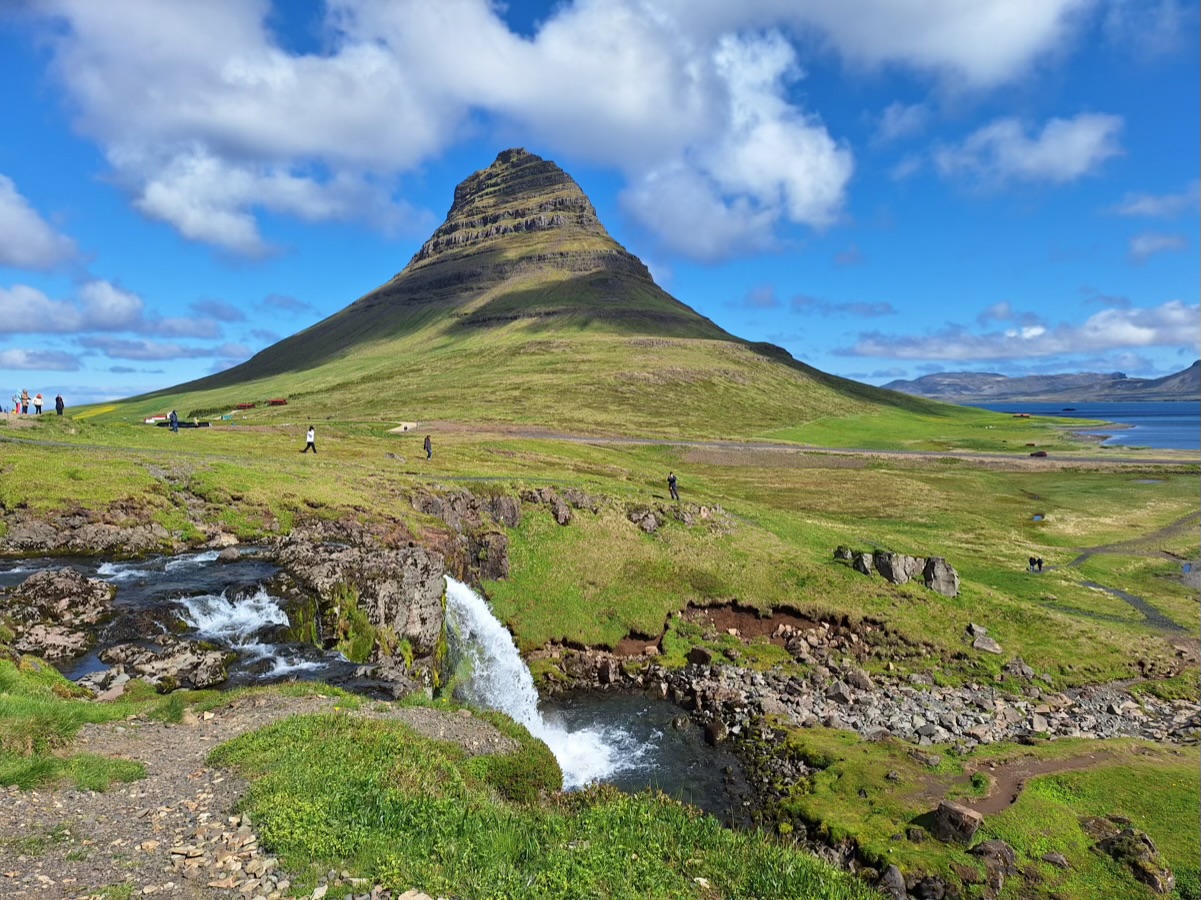
The first stop was Kirkjufell, Iceland’s most photographed mountain thanks to its unique shape. The drive there was scenic, and the mountain itself is beautiful, though there isn’t much to do beyond taking photos. Climbing it isn’t recommended unless you hire a guide, as the route is steep and includes rope sections.
Next, we stopped at Gilbakki, a cozy café with tasty food. After lunch, we took a short walk around the village of Hellissandur before continuing the drive. Our next stop was Saxhóll Crater. It’s smaller and less dramatic than Hverfjall, but it features an award-winning metal staircase leading to the top. It’s a quick stop that’s worth it only if you’re passing by.
We then headed to Djúpalónssandur beach, but the road was closed due to construction. Since we had a cave tour booked, we didn’t have time to walk there and back. If you do have time, I’d recommend including it. Instead, we drove to the Malarrif Visitor Center and walked to the nearby lighthouse. This is also a good place to use the restroom before visiting Vatnshellir Cave, which has no facilities nearby.


The cave is only accessible with a guide, so booking is required. The tour lasts about 45 minutes and includes a moment where all lights are turned off to experience total darkness—a surreal feeling. Apart from that, the tour wasn’t very memorable so it’s skippable if you’re short on time.

After the cave, we drove to Arnarstapi for the 2.4 km coastal walk to Hellnar. This was the highlight of the day. The views were stunning, especially in the sunny weather we were lucky to have. At Hellnar, we took a short break to enjoy the scenery before walking back to the car.
We made two quick final stops. First at Búðakirkja, a black wooden church surrounded by open nature—perfect for a quick photo. Then at Ytri Tunga Beach, known for seal watching. If you don’t see seals right away, walk along the beach in either direction—just be quiet and avoid getting too close. It’s a great chance to see seals in their natural environment.
After the last stop, we headed back to the hotel to rest before our final full day in Iceland.
Day 9: Glymur Waterfall & Reykjavik
Driving Time: 2h 30min (175km)
Attractions: Glymur Watefall, Reykjavik
Accommodation: Airbnb Vogar


On the final day of the trip, it’s time to head back to Reykjavik. But before you do, there’s one last stop you shouldn’t miss: Glymur Waterfall, Iceland’s second-tallest waterfall. Unlike most of the waterfalls on this itinerary, visiting Glymur requires a hike. Don’t be discouraged, though—it’s a scenic trail that takes you to the top with stunning views along the way.
A unique part of this hike is crossing a river on a wooden log, placed in the summer months, with a metal wire for balance. The log is set up at the end of May, and it’s essential for crossing the river, so don’t attempt the hike before then. While crossing the river on a log may sound intimidating, it’s actually quite manageable.

At the top, you can either retrace your steps or cross the river again and descend on the opposite side. The river is wide but shallow, and you can cross on foot. Just take off your shoes if you want to keep them dry. We chose to cross, and although we got a bit wet, it added to the adventure. Plan for around 4 hours to complete the hike. Make sure to bring snacks, as there are no facilities on the trail. We stopped at Geirabakarí Kaffihús for sandwiches before we set off.
At the top, you can either retrace your steps or cross the river again and descend on the opposite side. The river is wide but shallow, and you can cross on foot. Just take off your shoes if you want to keep them dry. We chose to cross, and although we got a bit wet, it added to the adventure. Plan for around 4 hours to complete the hike. Make sure to bring snacks, as there are no facilities on the trail. We stopped at Geirabakarí Kaffihús for sandwiches before we set off.
With limited time left in Reykjavik, I didn’t mention museums, but you could consider visiting them if you have more time to spare. In the evening, we drove to Vogar, where we had booked an Airbnb for the night. Since our flight was early, we didn’t want to drive all the way from Reykjavik to the airport. Hotels near the airport were pricey, so we opted for a more affordable Airbnb. It didn’t look too inviting from the outside, but it had everything we needed for our last night in Iceland.