
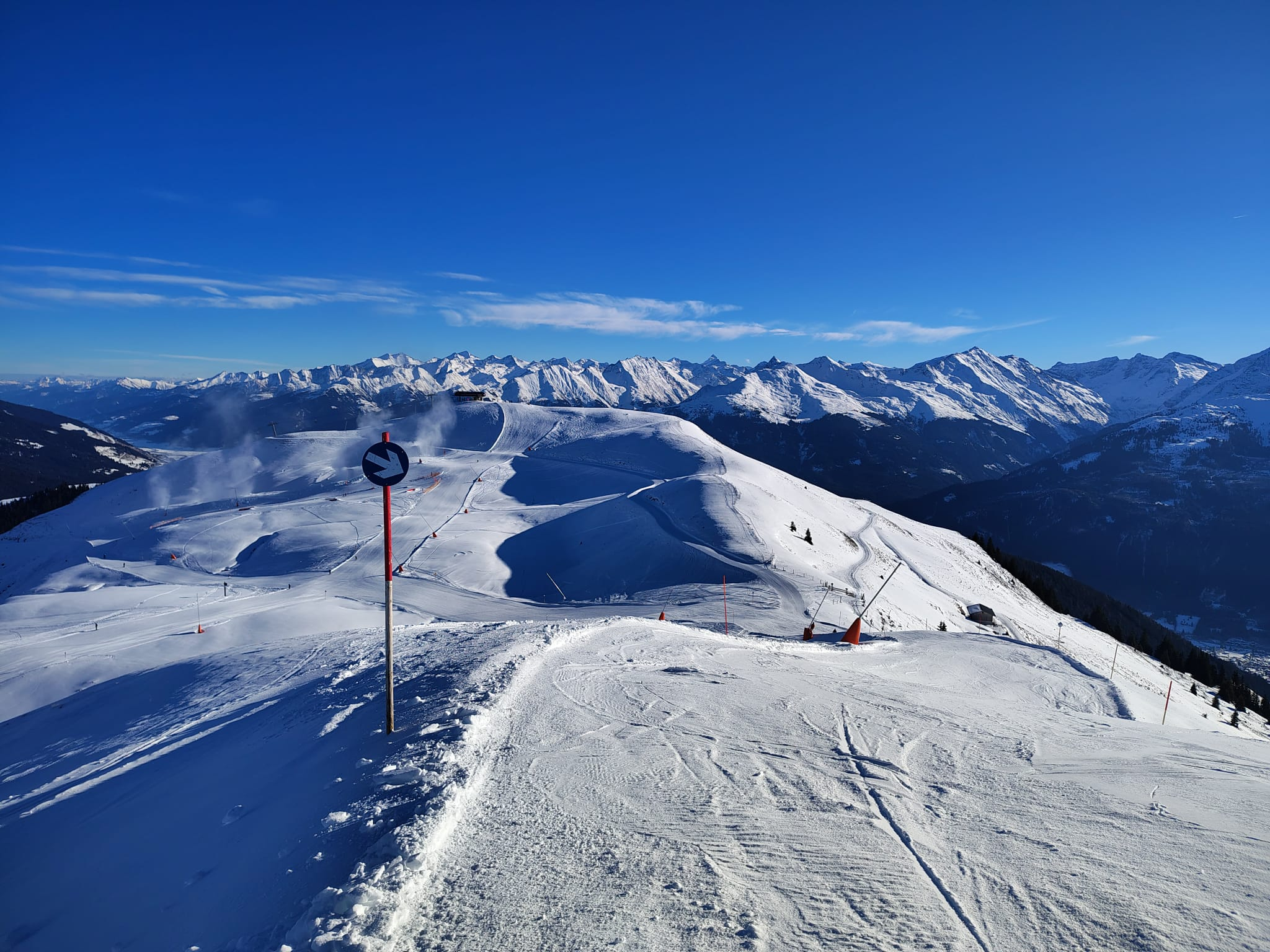
Kitzbühel is one of the most famous names in alpine skiing. It best known for hosting the legendary Hahnenkamm downhill race.With around 230 km of slopes, easy access from both Salzburg and Innsbruck airports, and classic Austrian charm, KitzSki looks like a great choice on paper.
In reality, though, it did not quite live up to the hype. I found the terrain underwhelming, piste grading often inaccurate, and some areas surprisingly crowded for a resort of this size. In this post, I review the different aspects of a ski holiday in KitzSki, from the skiing itself to the overall experience, and explain where it fell short for me.
Quick Stats: KitzSki
📍 Location: Tyrol, Austria
⛰️ Altitude: 800 m – 2,000 m
🎿 Pistes: 233 km
46 blue 🔵 | 32 red 🔴 | 18 black ⚫
🚡 Lifts: 58 total
1 aerial tramway | 11 gondolas | 28 chairlifts | 8 tow lifts | 10 carpets
🕒 Opening Hours: 8:30am – 4:00pm / 4:30pm (seasonal)
KitzSki Resort Review
Resort Connectivity – 6/10
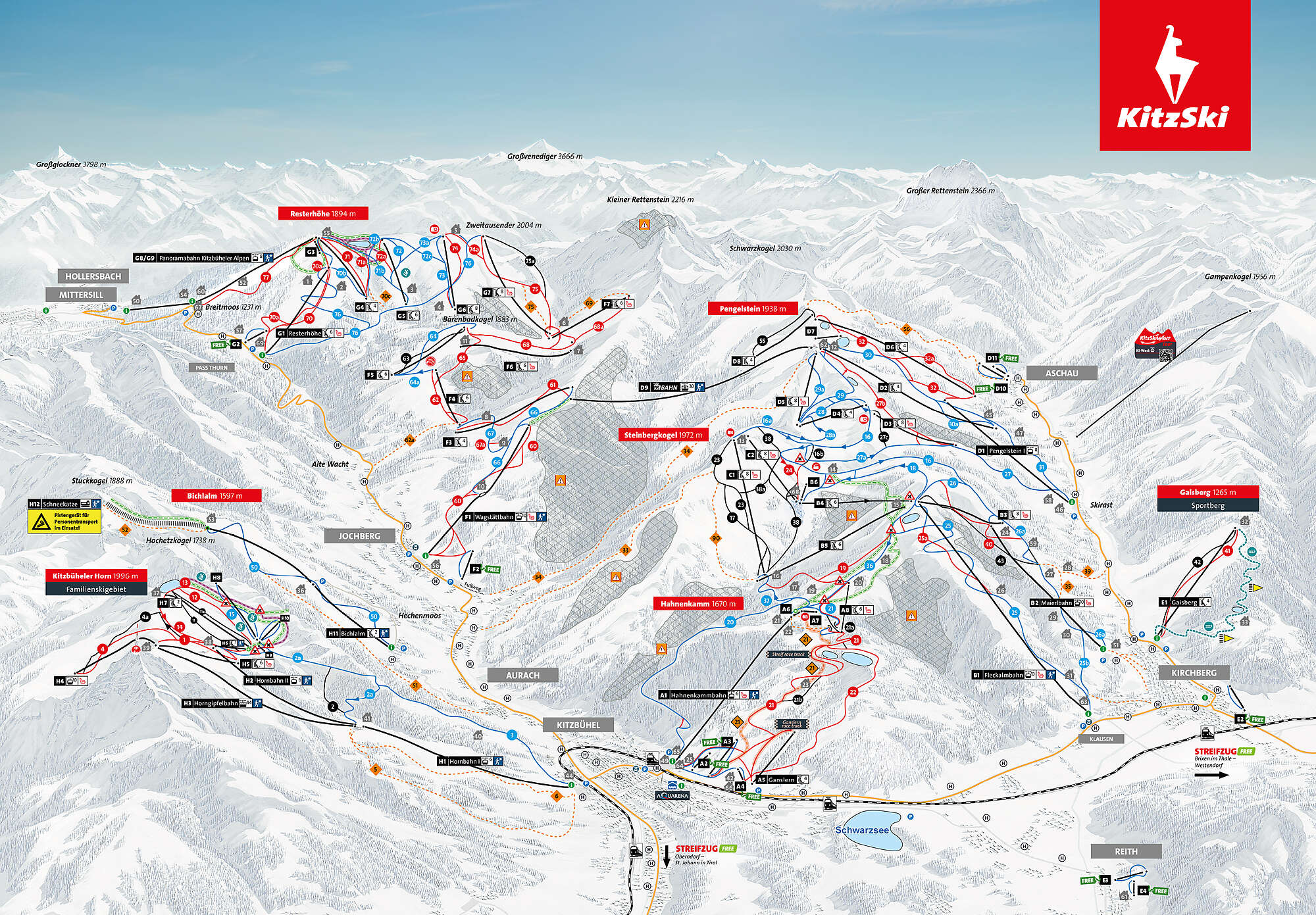
KitzSki is made up of two main ski areas. The larger one is Kitzbühel Kirchberg, and the slightly smaller one is Jochberg Mittersill. There is also the Kitzbüheler Horn section with 17 km of slopes but it is only accessible by ski bus. There are also a couple unconnected lifts around Kirchberg. Because these areas are not fully linked by pistes or lifts, we chose not to visit them. The lack of full connectivity is inconvenient, especially if you prefer to avoid ski buses. That said, the two main areas offer plenty of skiing, so this was not a deal breaker.
The two main sectors are linked by a long cable car that needs to be taken in both directions. One time during our stay it was closed due to high winds. Crossing between areas was then only possible by ski bus. Weather issues are understandable, but this can leave you confined to a smaller part of the resort than planned.
The biggest issue for me, however, was the time it took to move across the resort. Jochberg Mittersill is laid out as a long, linear chain of mountains, which requires frequent traversing and offers limited route options. Meeting up with a group can take time, and there are often few slope choices off a given lift. Kitzbühel Kirchberg is better connected, but travel times are still long. Many of the linking pistes are also quite flat, making the experience feel more like transit than skiing.
Overall, resort connectivity was workable but far from seamless. As a result, we spent a fair amount of time moving between areas instead of skiing the runs we wanted.
Pistes & Terrain – 7/10
KitzSki has plenty of enjoyable pistes, with long runs that let you really get into your skiing. One of our favorites was number 60 from the Jochberg cable car, which offered a nice, consistent gradient. The Kitzbühel side offers even more choice, but it was noticeably more crowded, with short queues forming at some lifts.
The main drawback for our group was inconsistent piste grading. In the Jochberg Mittersill area, it was often hard to tell blues from reds. Beginners may struggle to find slopes suited for practice. The blues leading down to Kirchberg were long and flat, but often crowded with other beginners, which made skiing less enjoyable. In general, KitzSki’s blues tend to be either very flat or fairly steep, with little in between.
Black runs are limited, with most located along the C1 and C2 chairlifts in the Kitzbühel area. Some were closed during our stay, which left advanced skiers with relatively few challenging options.
Overall, the terrain is enjoyable for intermediate skiers, but beginners may struggle to practice and advanced skiers will find the options somewhat limited.
Lifts – 9/10
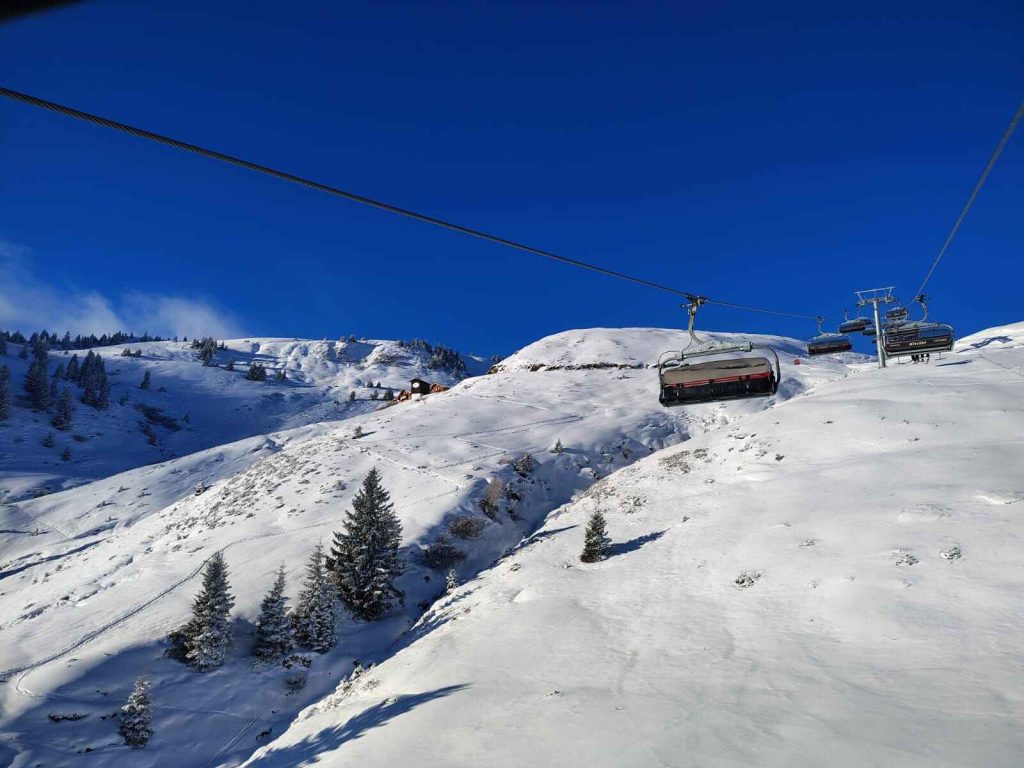
As is common in Austrian resorts, the lifts at KitzSki are almost a perfect 10 out of 10, with just a few older connecting lifts preventing a perfect score. Most of the lifts are modern 6- or 8-seater chairlifts with heated seats, which were a real comfort on very cold days. The resort also has a number of modern cable cars with comfortable lifts spread evenly across the ski area.
In terms of lift quality, KitzSki is exactly what you expect from an Austrian ski resort, reliable, efficient, and comfortable.
Piste Infrastructure – 10/10
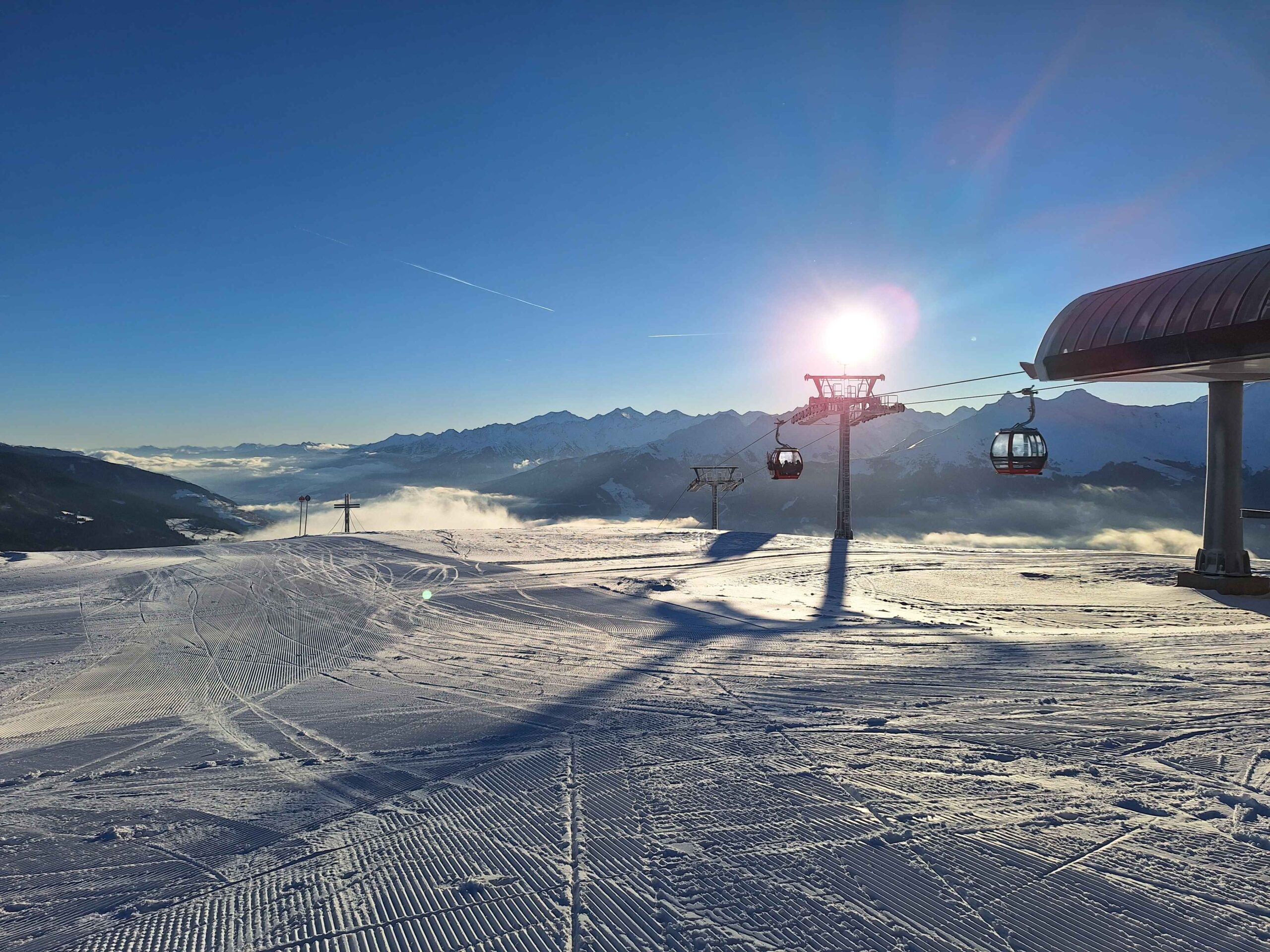
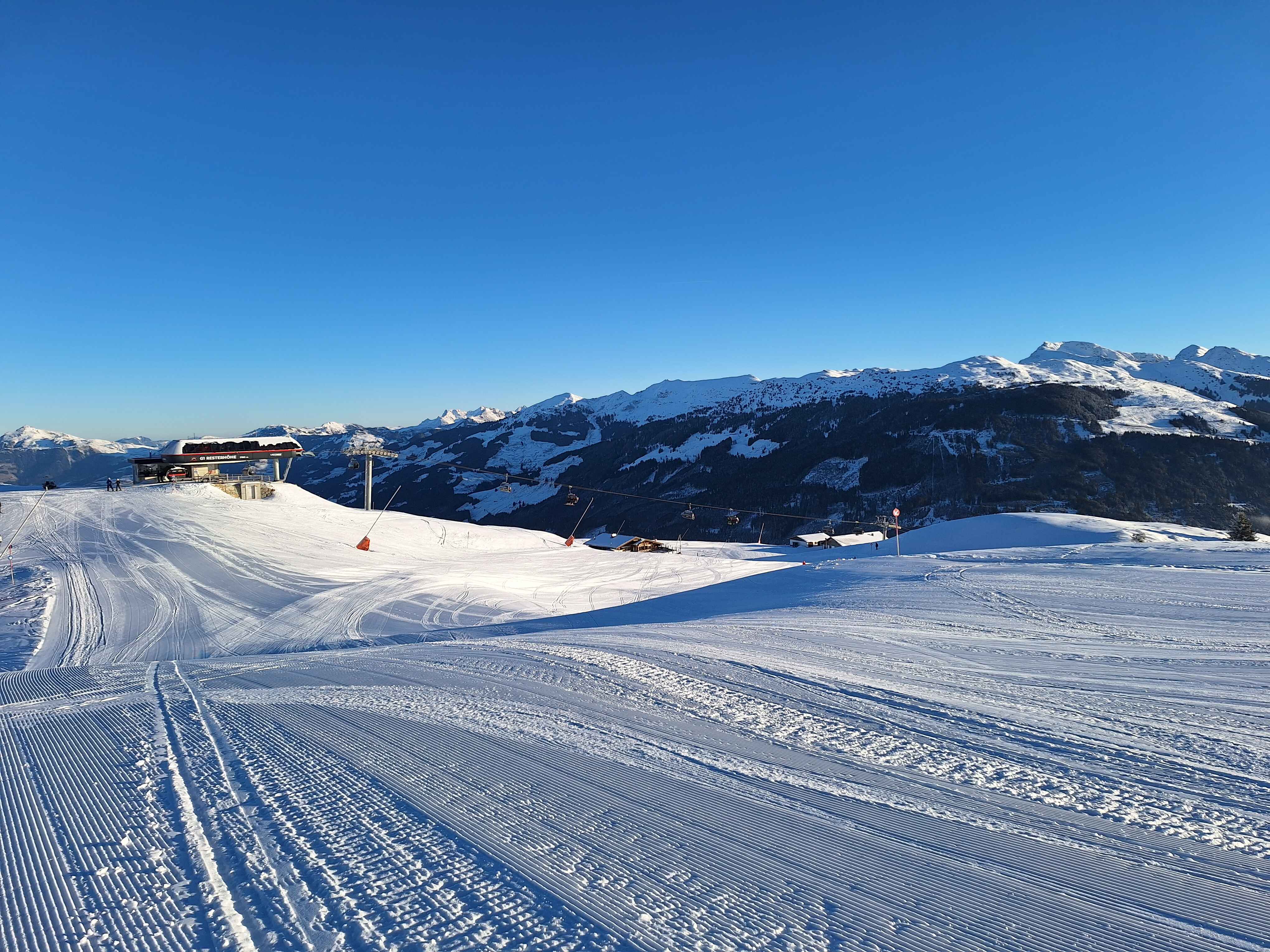
The piste infrastructure at KitzSki was a highlight. All slopes were perfectly groomed each morning, and signage was clear. With a simple network of slopes and lifts, it was easy to find your way around the resort, and we frequently saw ski patrol ready to help struggling skiers.
There are plenty of huts across the resort for lunch or drinks. Prices are high, as is typical in ski resorts, but the food was consistently delicious and service was usually fast. Our favorite was Panorama Alm (number 5 on the map) with its traditional cozy interiors, quick service, and excellent food.
Bathrooms are easy to find, with facilities not only in bars and restaurants but also at many chair lifts and cable cars.
Overall, the infrastructure was excellent. It’s clear a lot of care goes into improving the overall skier experience by focusing on the smaller details.
Snow Conditions – 9/10
During our trip the snow conditions were good. Despite a solid snow cover we saw snow cannons working most days to create extra snow on the sides for when temperatures rise and snow starts melting. Only a few of the pistes were closed during our stay and snow cover was good on most although not all pistes. It’s clear the resort puts effort in ensuring good snow cover in uncertain winters we’ve had in the recent years.
Pricing & Value for Money – 7/10
A holiday in Kitzbühel is not cheap. Although there isn’t a huge variation in ski pass prices among large Alpine resorts, KitzSki is still on the higher end, with a 6-day ski pass costing over 400 euros. Early booking discounts are available, but they are minimal. Ski rentals in Mittersill, where we stayed, were very expensive, likely due to limited competition. Accommodation in Kitzbühel itself is particularly pricey, though staying in smaller towns within the resort is more affordable. Ski lessons are also on the pricier side, reflecting KitzSki’s reputation as one of Austria’s most famous resorts.
For intermediate and advanced skiers, the value is reasonable. The resort is large, lifts are modern and comfortable, and piste infrastructure is excellent. Beginners may struggle to find suitable slopes while paying a premium. For a more affordable beginner friendly option in Europe, Andorra is a great alternative. For a similarly large ski area, you can head to Grandvalira. To learn more, see my post Grandvalira Review: What You Should Know Before Booking.