
If you only have three days to explore the Scottish Highlands, you can still see a lot without trying to cram every famous destination into your itinerary. I wanted to focus on nature, combining hiking, dramatic mountain scenery and scenic drives while keeping the pace manageable.
I spent three days exploring the Highlands by car, travelling from Glasgow to Glencoe, Glenfinnan and Fort William before finishing around Loch Lomond. With limited time, I focused on a mix of hiking and sightseeing rather than trying to visit every famous destination. This meant skipping places such as the Isle of Skye, which would have required spending a large part of the trip driving.
In this guide, I’ll share the route I followed, the hikes and sights I included, and some practical things I learned along the way.
At a Glance

Duration: 3 days
Starting point: Glasgow
Transport: Rental car
Accommodation: 2 nights around Fort William
Focus: Hiking, mountain scenery and scenic drives
Starting Point: Glasgow
I chose Glasgow as the starting point for this trip because it is a convenient gateway to the western Highlands, with Glencoe and Fort William both closer than they are from Edinburgh.
I arrived late the evening before and stayed near Glasgow Airport so I could get a good night’s sleep and start my first day feeling fresh. Glasgow also worked out well for my budget, as I found hotels around Glasgow Airport to be much cheaper than those near Edinburgh Airport.
The Route
Over three days, I followed this route:
Day 1: Glasgow → Glencoe → Glenfinnan → Fort William area
Day 2: Hiking around Fort William
Day 3: Fort William area → Loch Lomond → Glasgow
This itinerary combines some of the Highlands’ most iconic scenery with several hikes, while keeping the driving manageable within a three day trip.
Getting Around

For this itinerary, I would recommend renting a car. The places I wanted to visit are spread across the Highlands, and having a car gave us the flexibility to combine hikes, viewpoints and scenic drives without being tied to public transport schedules.
We found driving easier than we had anticipated. The roads can be narrow in places, but they were generally wider than what we had experienced on our trip to Wales earlier this year, so they didn’t feel particularly difficult to navigate.
Driving was also an enjoyable part of the trip itself. You spend relatively little time on motorways, and much of the journey takes you through scenic Highland landscapes, so even getting from one stop to another feels like part of the experience.
We picked up our rental car at Glasgow Airport and used it throughout the trip.
Day 1: Glencoe & Glenfinnan
The first day took us from Glasgow into the heart of the Highlands, with dramatic mountain views, a hike through the Lost Valley and a stop at the famous Glenfinnan Viaduct. It’s a fairly full day, but the route works well as most of the stops are naturally along the way.
Buachaille Etive Mòr

From Glasgow, it’s around a 2 hour drive to the first viewpoints along the A82 towards Glencoe.
One of the first sights that really caught my attention was Buachaille Etive Mòr, a striking pyramid shaped mountain that rises above the valley. There is a very small layby where you can stop and take in the view, but it’s a popular spot and spaces fill up quickly.
The good thing is that people generally don’t stay for very long, so if the layby is full, you can wait in the car for a space to become available. You can also enjoy the view without getting out of the car.
If you have more time, you can continue along Glen Etive for more viewpoints, including the location where a scene from Skyfall was filmed. I skipped this on my trip and continued towards the Three Sisters.
Three Sisters & Lost Valley
The next stop was the Three Sisters of Glencoe and the Lost Valley hike.
The viewpoint has a larger free car park, but it’s extremely popular. We had to wait around 40 minutes for a parking space, which was much longer than I had anticipated. We decided to wait because we specifically wanted to do the Lost Valley hike.


The hike took us around 2 hours. If you prefer to take your time and stop regularly for photos, I would allow up to 3 hours.
The trail gains just under 300 metres of elevation over a little more than 2 kilometres. The ascent is fairly steep and there are a few sections that involve mild scrambling. Nothing that I found particularly intimidating, but proper footwear is essential.
At the end, you reach the beautiful green Lost Valley, which is definitely worth the climb. Most people seemed to stop in the first part of the valley, but if you continue further down, you can find a much quieter spot. I really enjoyed having some peace and quiet there before heading back. The return follows the same route back to the car park.
Route map: Lost Valley route on Komoot
Lunch in Glencoe
After the hike, it’s a good time to stop for a late lunch before continuing towards Glenfinnan.
I really liked Crafts & Things in Glencoe. It’s part shop and part café, serving both savoury and sweet treats. Hot food is served until 4pm, so keep this in mind if you’re following a similar schedule.
There is a car park outside the café. It can get busy, but we managed to find a space when we visited.


Glenfinnan Viaduct
From Glencoe, it’s around one hour by car to Glenfinnan.
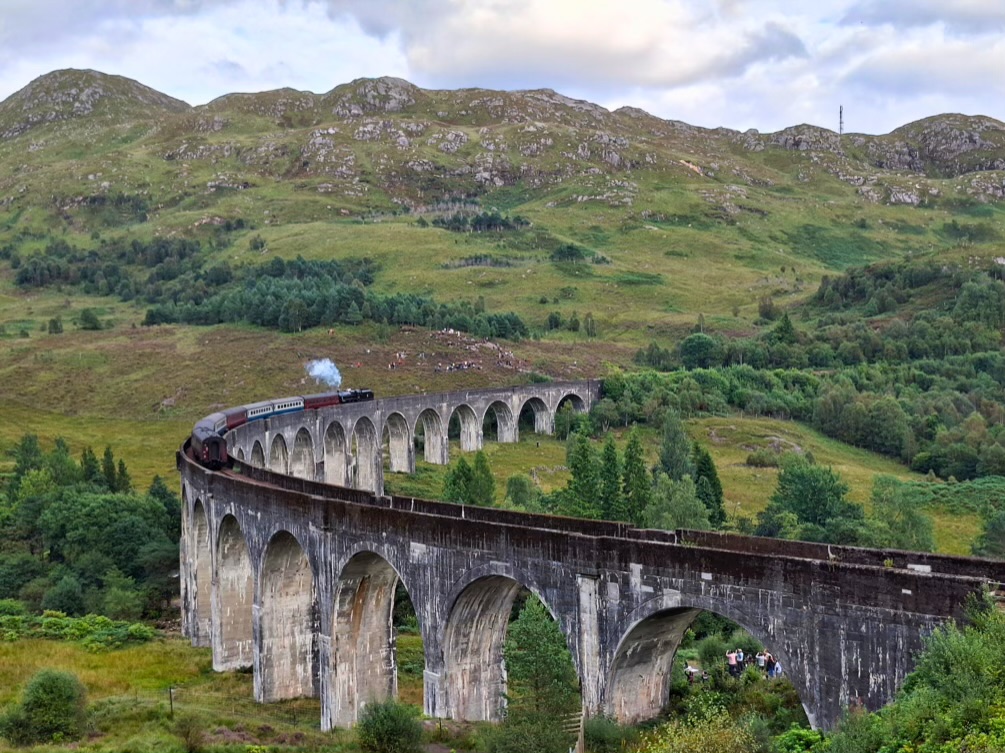
Glenfinnan is best known for its famous viaduct, which you might recognise from the Harry Potter films, where the Hogwarts Express was filmed crossing the bridge.
There is a large pay and display car park near the visitor centre. From there, it’s around a 10 to 15 minute walk to the viaduct viewpoints.
If you want to see the Jacobite steam train crossing the viaduct, check the current train timetable before your visit. During peak season, the train crosses the viaduct four times a day. The train should cross the viaduct around 30–40 minutes after departing Fort William. You can also see the train on its return journey from Mallaig, when it should cross the viaduct around 30–40 minutes before arriving back in Fort William.


It’s worth arriving earlier so you have time to walk to the viewpoint and find a good spot. The two best viewpoints are higher up on either side of the viaduct on either East or West side.
It’s generally considered that the view is better when the train is travelling from Fort William towards Mallaig. However, this itinerary works better for catching the last train viewing, which is in the opposite direction.
Personally, I still found the experience great even when watching the train travelling in the opposite direction, so I wouldn’t completely rearrange the itinerary just to see it from the other side.
Where to Stay
That’s the end of the activities for the first day. I recommend staying around Fort William, as it makes a convenient base for the second day. I wanted to stay in the same place for both nights, rather than spending time packing up and moving between different accommodations. With only three days, this helped keep the itinerary simple and meant we could spend more time exploring. Fort William area is a good base for hiking, with several popular trails and mountain areas nearby.
I chose Nevis Basecamp because it offered modern accommodation at a lower price than many of the alternatives I found. It is in a fairly remote location, but being right next to the cable car makes it particularly convenient if you’re planning to hike from Nevis Range the following day.


There is a café next to the accommodation that serves breakfast, lunch and dinner. If you want more choice, you can stop for dinner in Fort William on the way back from Glenfinnan.
If you want to eat at one of the more popular restaurants in Fort William, such as Crannog at Garrison, I’d recommend booking at least a couple of days in advance.
Day 2: Hiking Around Fort William
Since this is the only day of the itinerary without any long-distance driving, it’s the best day to dedicate to a longer hike. There are several options around Fort William, with the most obvious being Ben Nevis, the tallest mountain in the UK.
Ben Nevis
Hiking Ben Nevis is a full-day adventure. You should allow around 7 to 9 hours for the hike and have a good level of fitness and stamina.
I decided to skip it for two reasons. The first was the weather. The forecast was poor, and I didn’t want to put in all that effort without the views, especially as I had read that the route itself is not generally considered one of the most interesting mountain hikes in the area.
The second reason was parking. To have a good chance of finding a parking space, you need to arrive early. I simply didn’t want to wake up at the crack of dawn and then worry about finding a parking spot. I had done exactly that a few months earlier for Snowdon, and in good weather, I felt it was worth it. With the cloudy and rainy conditions I had on this trip, I decided it wasn’t.
Aonach Mòr & Aonach Beag
Instead, I chose to hike Aonach Mòr and Aonach Beag, which are conveniently located right above Nevis Basecamp.
Rather than hiking all the way from the bottom, I took the cable car up and started the hike from there. The fact that this is the only mountain cable car in the UK, combined with the poor weather, definitely helped convince me to spend £29 on a return ticket.
Despite the conditions, we decided to hike upwards along the ski lifts. The trail is not marked, but for most of the way you can follow a visible path on the ground created by people walking up and down.


The climb was fairly steep and, unfortunately, we weren’t rewarded with views of the surrounding mountains as there was virtually no visibility. We still decided to continue to the top of Aonach Mòr, but given the conditions, we chose not to continue on to the second summit, Aonach Beag.
On the way down, we took a different slope, which turned out to be very muddy. I would recommend simply following the same route back down, directly above the cable car station.
The views in photos look fantastic, but unfortunately, with the weather we had, I can’t tell you what they are actually like in person.
After the hike, we took the cable car back down, stopping at the café at the top of the cable car station before heading down. Unfortunately, I found the food expensive for the quality, so I wouldn’t recommend planning your day around having lunch there.
Route map: Aonach Mòr and Aonach Beag route on Komoot
An Evening in Fort William
After returning to the hotel, we showered and rested. We had originally planned to head into Fort William in the evening for a cruise along Loch Linnhe followed by dinner.
However, the rain continued throughout the day, and eventually we decided we had had enough of it. We skipped the cruise and had dinner at the hotel instead.
It wasn’t quite the evening we had planned, but sometimes a Highlands itinerary has to adapt to the weather.
Day 3: Loch Lomond & Conic Hill
The final day is shorter and includes around 3 hours of driving back to Glasgow Airport, so I didn’t want to pack in too many activities. Instead, I added one final stop around Loch Lomond, which you drive alongside on the way from Fort William back to Glasgow.
The stop turned out to be one of the highlights of the trip. The hike was short but incredibly rewarding and exceeded my expectations, making it a perfect way to finish the trip.
Breakfast Along the A82
Rather than having breakfast at the hotel, we stopped along the A82 at Artisan Café & Deli. It’s located in a converted church with cosy interiors, and the food was delicious and very reasonably priced.


After a late breakfast, we continued south along Loch Lomond towards Balmaha for the final hike of the trip.
Conic Hill
There is a large pay and display car park by the Balmaha Visitor Centre. It was busy when we arrived, but thanks to its size we managed to find a space.
From the car park, you can hike up Conic Hill, a relatively short hike with beautiful views over Loch Lomond and its many islands.
At around 300 metres above sea level, Conic Hill sits right on the boundary between the Scottish Highlands and Lowlands. The scenery is less dramatic than further north, but it is still beautiful and offers a completely different perspective on the Scottish landscape.


I found it to be the perfect little hike for a day that already involved a long drive. It’s rewarding without taking up most of the day, and it also gives you a chance to experience a different type of scenery from what you see around Glencoe and Fort William.
After the hike, you can stop for a snack or drink at St Mocha, a café directly opposite the car park.

From Balmaha, there’s around 45 minutes of driving left to Glasgow Airport. After that, all that was left for me was to return the rental car and head home.
Route map: Conic Hill route on Komoot
What I Wish I’d Known Before Visiting the Scottish Highlands
There were a few things that negatively affected my experience during the trip and are worth keeping in mind if you’re planning your own visit.
Scottish Weather Can Affect Your Plans
First and foremost, the weather. The Scottish Highlands are known for plenty of rain, and when you only have three days, there’s a real chance that you might not get a single day with the clear weather you were hoping for.
While I didn’t let the weather change the itinerary in a major way, it certainly affected my experience. This was especially noticeable on the second day, when low hanging clouds meant there was virtually no visibility on the higher sections of the hike.

Unfortunately, there aren’t always many alternatives for spending your time when the weather is poor, and even when there are, they won’t necessarily replace the mountain views you were hoping to see. With appropriate waterproof gear, you can still explore the outdoors, but it’s worth keeping in mind that your experience might look very different from the stunning photos and videos you see online.
Don’t Underestimate the Midges
The second thing that surprised me was the midges. These tiny insects can be incredibly annoying and leave you with plenty of bites. I was surprised by how many small red dots I ended up with on my hands and face after spending time outdoors.
Midges are particularly problematic during the summer months, with July and August being the peak midge season. Wearing long sleeves can help, while a head net can protect your face. Ideally, wear it with a wide brimmed or rounded hat so that the net doesn’t rest directly against your skin.
There are also repellents available, although I haven’t personally tried them. If you want to avoid the worst of the midges, visiting outside July and August is another option worth considering.
One saving grace is that midges can’t fly in high winds. On windy days, they were much less of a problem, which was particularly welcome given the weather conditions we had during the trip.

Parking Can Be Difficult
The third issue was the scarcity of parking along the A82, particularly at the Three Sisters Viewpoint.
We spent 40 minutes waiting for a parking space to become available so that we could do the Lost Valley hike. Arriving earlier would have helped, but with around 2 hours of driving from Glasgow, getting there very early wasn’t something I wanted to do.
Parking was also challenging in other places, and after a while it became quite frustrating. The problem is partly a result of how many people visit the Scottish Highlands, particularly during the summer months. Large crowds can take away from the experience if you’re hoping to find some peace and quiet.
Fortunately, hiking is a great way to escape the worst of the crowds. Choosing a lesser known trail rather than sticking to the most popular viewpoints and hikes can also help you find a quieter side of the Highlands.
Would I Change This Itinerary?
Not necessarily. The itinerary worked well for what we wanted to see and do in three days. The biggest variable we couldn’t control was the weather, which had the greatest impact on our experience.
Travelling earlier or later in the season could have helped us avoid some of the crowds and midges, but I wanted to make the most of a long weekend, so I didn’t have much flexibility with the dates.
I’d definitely like to return to the Scottish Highlands in the future. There are still plenty of places I’d like to explore, including the Isle of Skye, and hopefully next time I’ll get to experience the Highlands with better weather too.