
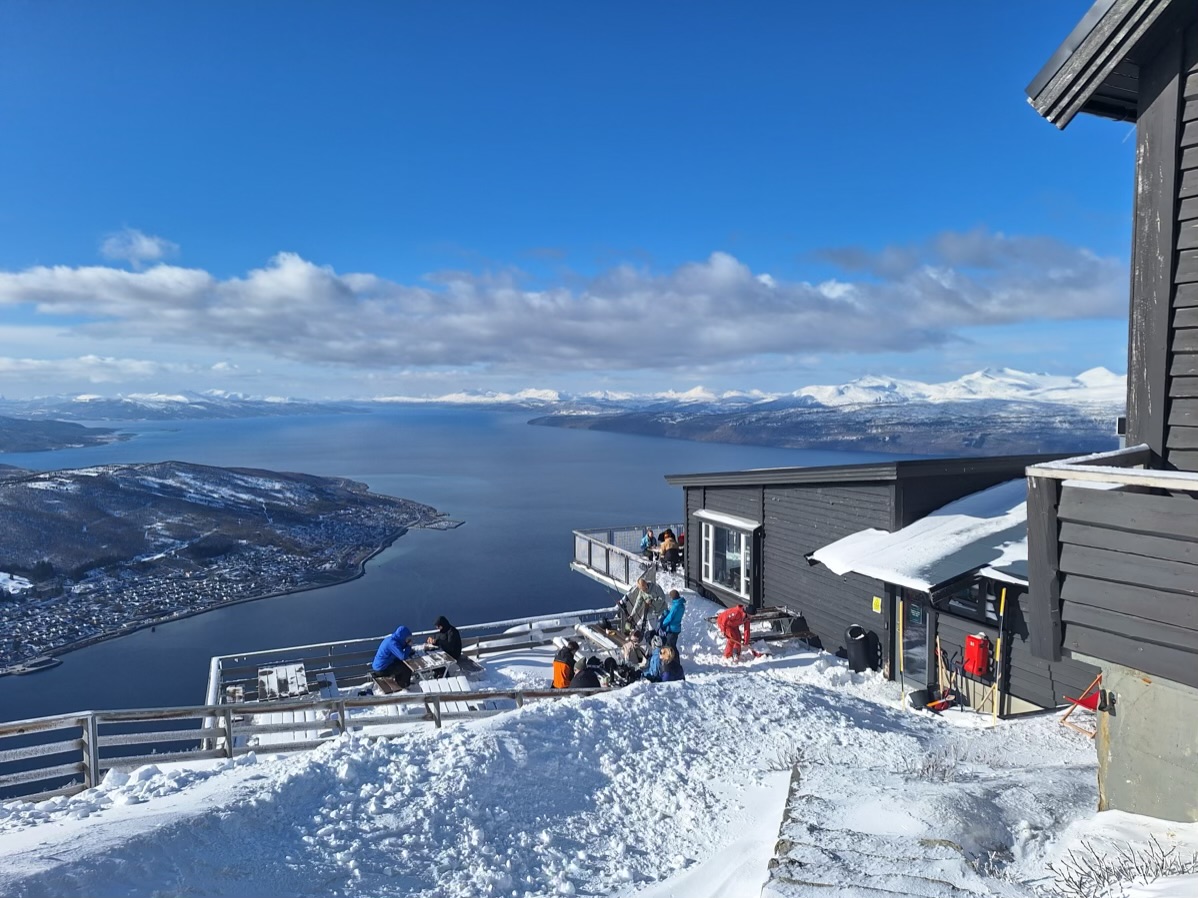
If you want to combine a winter trip to Lapland with quality skiing, Narvik is a great option. Located more than 200 km north of the Arctic Circle, it offers a modern ski area with stunning fjord views and good chances to see the Northern Lights, along with plenty of other winter activities. If you are still deciding where to go or what to expect, I’ve put together a full Lapland guide here: Visit Lapland: everything you need to know.
Narvikfjellet is not the biggest resort, but it stands out for its long descents and updated lift system. Ongoing investment shows clear ambition, and while there is still room to improve, it already offers a unique skiing experience. In this post, I will share all the practical information you need to plan your trip.
Where is Narvik and How to Get There
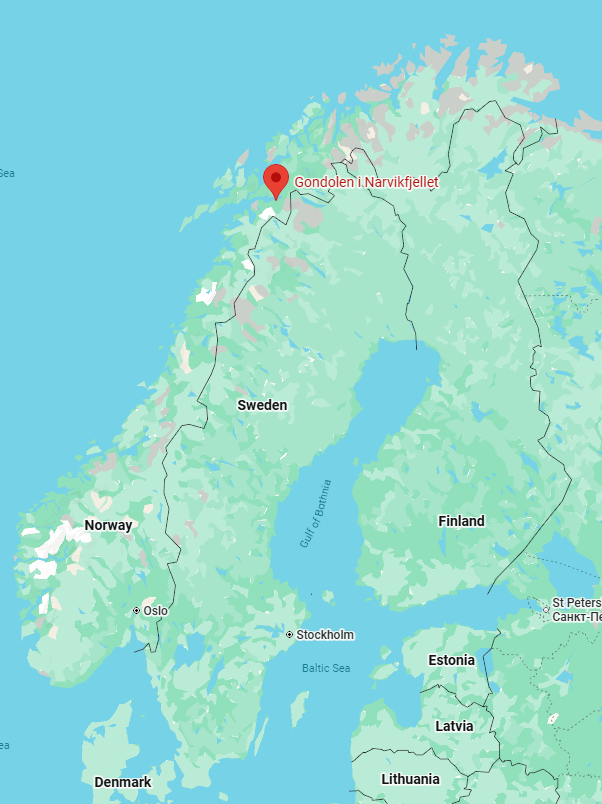
Narvik is a city in Northern Norway, located 225 km north of the Arctic Circle. It sits near the famous Lofoten Islands, making it easy to spot on a map and a great base for exploring the Arctic.
By Plane
The nearest airport is Evenes Airport, about an hour’s drive from Narvik. It’s a small airport mostly serving domestic flights. Direct international connections are limited to Zurich, Frankfurt, Milan, and Riga, with only 1–2 flights per week. For most travelers, this means flying indirectly via Oslo. Even though Oslo and Evenes are both in Norway, the flight takes over 1.5 hours due to the country’s vast northern stretch.
By Rail
Narvik is also accessible by train, thanks to rail lines connecting northern Sweden and Norway. Direct trains run from Stockholm, taking 18–20 hours with two daily departures: an evening train around 6 PM arriving the next day around noon, and a later train at 10 PM arriving around 6 PM.
While the journey is long, sleeper compartments allow you to rest overnight and wake up to the stunning Arctic scenery. The final 43 km of the route in Norway, known as the Ofoten Line, is a major tourist attraction. This section is even operated as dedicated sightseeing trains, offering breathtaking fjord views and photo opportunities before you even reach Narvik.
When to Visit Narvik in Winter
Narvik usually sees its first snow in October, but Narvikfjellet ski resort doesn’t open until late November or early December, once snow cover is sufficient for skiing. You can generally expect good snow to last through May.
Pre Season (December – February)

The period up until mid February, unlike in most European ski resorts, is considered low season due to the very limited daylight during this time of year. Being above the Arctic Circle, Narvik experiences polar night, when the sun doesn’t rise from early December until early January.
After polar night, the days gradually get longer, reaching about eight hours of daylight by mid-February. During the low season, skiing is possible on a number of lit slopes, but not all lifts are operational. The cable car and the chairlift to the top remain closed until high season begins.
Ski passes are slightly cheaper until the end of January, but the price difference is small considering the limited skiing experience. For that reason, I would recommend visiting Narvik during the high season.
High Season (March – April)

High season runs from the end of February through April. Visiting in April is a great opportunity to ski while many European resorts are already closing for the season. By the end of April, days are much longer, with up to 18 hours of daylight.
However, if you are looking for a more traditional winter experience and a chance to see the Northern Lights, March is a better choice. Temperatures are lower and nights are darker, which is necessary for seeing the Aurora Borealis.
If you want to take part in outdoor adventures outside the Narvikfjellet slopes, I would recommend the second half of March, when days are longer. It offers the best balance of daylight and dark nights for Northern Lights hunting.
Where to Stay in Narvik
Being a city, Narvik offers plenty of accommodation options, which can be divided into two main categories: in the city and at Narvikfjellet ski resort.
In the City
Most hotels and vacation rentals are located in the city itself. Staying in the city centre is a good choice if you plan to rely on public transport. From the airport, the city centre is reachable in about an hour by airport bus, and if you arrive by train, the train station is right next to the city centre. You’ll also be within walking distance of cafés, restaurants, and shops. Getting to Narvikfjellet ski resort from the city requires either a city bus or a fairly long uphill walk.
Some popular options include:
- Central hotels: Narvik Hotel Wivel, Scandic Narvik
- Between the slopes and city centre: Thon Hotel Narvik (located at the base of the lowest slope, although ski rental is higher up near the cable car)
- Budget: Narvik Budget Rooms
At Narvikfjellet ski resort
If you want to stay close to the slopes, options are good but more limited. A more affordable choice is Basecamp Narvik, a modern apartment hotel. It’s a ski-in/ski-out property with direct access to a green slope that leads to the cable car. When snow conditions are poor the green slope is likely to be closed but it’s a very short walk to the cable car along the green slope. A highlight of Basecamp Narvik is that all rooms have private balconies with stunning fjord views. Apartments range from studios to two-bedroom units. I stayed in a studio which was pretty spacious and had all the amenities I needed. Although it’s a self-catered property, breakfast can be pre-ordered, and there’s also a bar on site.


For a more premium experience, there’s Camp 291, a complex of slightly more remote ski-in/ski-out cabins. The cabins feature large floor to ceiling windows that showcase breathtaking fjord views. This makes them a spectacular choice for those who want to combine skiing with unique scenic accommodation. It is worth noting that in case of low snow cover, the walk to the cable car is longer than from Basecamp.
Narvik Ski Resort
📍 Location: Narvik, Nordland, Norway
⛰️ Altitude: 200 m – 1,003 m (803 m vertical drop)
🎿 Pistes: ~13 km (3 km ungroomed)
8.7 km blue 🔵 | 3.7 km red 🔴 | 0.7 km black ⚫
🚡 Lifts: 6 total
1 cable car | 1 chairlift | 4 tow lifts
🕒 Opening Hours (High Season):
10:00 – 16:30 (Tue, Thu, Weekend)
10:00 – 20:00 (Mon, Wed, Fri)
Infrastructure and Lifts
Narvikfjellet is the largest ski resort in Northern Norway and is being upgraded ahead of the FIS Alpine World Ski Championships 2029. A new six seater chairlift has replaced the old two person lift to the top. Unfortunately, the lift planned for the 2026 season was delayed, which meant this route was not accessible during my visit. It is expected to be operational from 2027.
The lower mountain is served by a 10 person cable car, three T bars and a magic carpet for beginners. It also offers ungroomed red slopes for more advanced skiers. During my stay the upper T bars were closed. While this did not affect my experience too much, clearer communication from the resort would have helped. On one occasion, the cable car was closed without any explanation. Overall, despite significant investment, the resort did not seem to make full use of all available lifts.
Snow Conditions
The biggest surprise for me was the lack of natural snow. Given the northerly location of Narvik and a season that usually lasts until May, I did not expect snow conditions to be an issue. However, during my visit at the end of March, temperatures stayed consistently above zero, which had also been the case earlier in the month. This resulted in limited natural snow, with several slopes closed, including the green run along the cable car and many off piste areas. Combined with lift closures, it was difficult not to feel some disappointment given the resort’s potential.


Skiing Experience and Atmosphere
Most lower slopes at Narvikfjellet are lit for evening skiing, which is combined with daytime skiing three times a week. This makes for a very unique setup, and I really enjoyed skiing in the late afternoon with the sun low on the horizon. It comes from the resort’s tradition when weekday skiing was only offered from 3 pm to 8 pm for locals. As the resort has grown in popularity, daytime skiing now starts at 10 am, while evening sessions continue on Mondays, Wednesdays and Fridays allowing both day and night skiing.
A restaurant at the top of the cable car offers stunning panoramic views. If the weather allows, you can sit outside, but even indoors the large windows make the scenery stand out. Après ski options include Camp Lodge and Basecamp Bar, although the atmosphere is fairly quiet compared to many other European ski resorts.
Final Thoughts
To conclude, it is clear there are big ambitions for this resort, with major investments including the new chairlift to the top. Opening hours have been updated to attract more visitors, and new trail maps have been introduced, but in practice the experience can still feel uneven due to inconsistent communication and a heavy reliance on natural snow. Still, when the sun rises over Narvik and reflects across the fjords, it is hard not to be impressed. The views are stunning, the slopes are quiet, and at times it feels like the mountain is almost yours alone. Combined with strong piste quality, it is an experience that is well worth it.
Other Winter Activities in Narvik
While skiing is the main attraction, you don’t travel this far north without exploring the many other winter experiences Narvik has to offer.

Cross-country Skiing
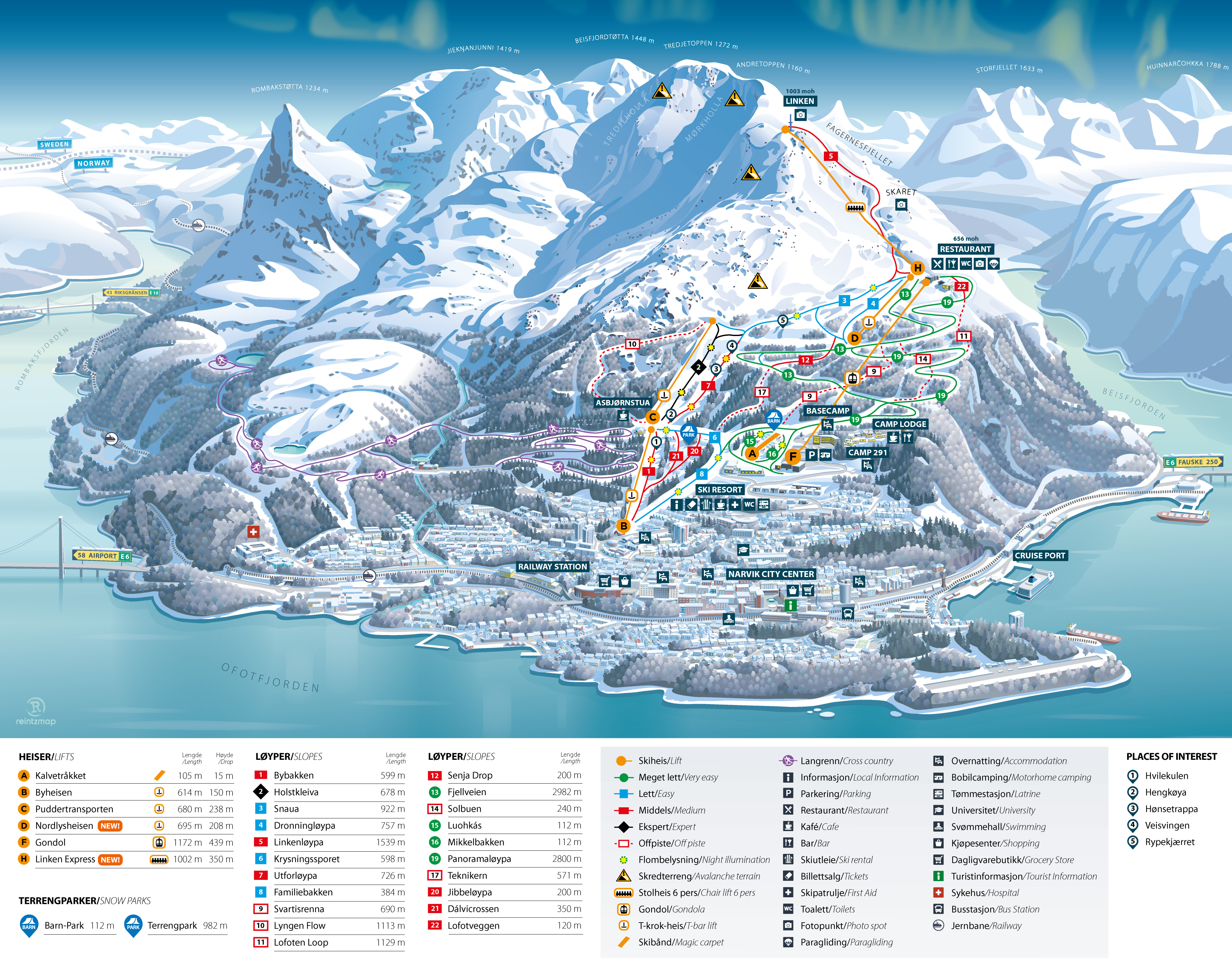
It’s often said that Norwegians are born with skis on their feet, and cross-country skiing is a national pastime. Trails start right at the bottom of the ski resort (marked in purple on the map above), making it easy to give it a try. Equipment can be rented at the ski rental near the cable car station.
During my visit, there was very little snow, so cross-country skiing was unfortunately not an option. The trails rely entirely on natural snowfall, which means that when temperatures rise above freezing, skiing quickly becomes impossible. Despite being located above the Arctic Circle, Narvik’s climate is influenced by the warm Gulf Stream, which can bring milder conditions than you might expect. If cross-country skiing is a priority for your trip, Narvik may not be the most reliable choice.
Snow Shoe Hiking
Snowshoeing is a great way to experience the mountains in winter. In Narvik there are no marked winter trails, so exploring on your own is not recommended unless you are experienced. Instead, you can join a guided tour, such as Snowshoeing Along the Fjord, which lets you explore the Arctic countryside and fully immerse yourself in nature. The tour also includes a typical Arctic lunch by the bonfire.
Winter Biking

Another way to actively explore the area around Narvik is with a Winter Electric Biking tour. Winter biking is very different from summer cycling and it can be quite tyring but the electric bikes make the experience more relaxed and enjoyable.
Although I have not tried winter biking in Narvik myself, I did experience it in Levi and really enjoyed it. It is a fun way to cover more ground than walking while still being close to nature and winter landscapes.
Arctic Sauna
After a day of outdoor activities, you can relax at the Arcitc Sauna in Narvik Harbour. This cosy, wood-panelled sauna floats on the fjord, and if you’re feeling brave, you can take a plunge into the icy water.
Bookings are made online for one-hour slots, which include time to change. The changing area can feel crowded and offers limited privacy, but the experience of sitting in a sauna floating on the fjord, with easy access to cold water, makes it a great option especially for days with bad weather.
Norther Lights Hunting
No Arctic winter trip is complete without hunting the mesmerizing Aurora Borealis. You can join an organized tour or venture out on your own. To get the best viewing, it’s important to avoid light pollution, so heading further out is recommended. Apps like My Aurora Forecast & Alerts can help you check the KP Index and cloud cover to increase your chances of seeing the Northern Lights.
Arctic Train

For a different perspective on the region, the Ofoten Railway offers stunning winter views of fjords, mountains, and snow-covered landscapes. The roundtrip runs from Narvik to the Swedish border town of Bjørnfjell, winding through tunnels and bridges that showcase the dramatic and challenging Arctic terrain.
Narvik War Museum
The Narvik War Museum offers a powerful insight into the area’s role during the World War II. Even if you’re not a history enthusiast, it is well worth a visit, especially when the weather turns. The exhibits help you understand why Narvik came under German attack, including the importance of the railway line from Kiruna to Narvik, which was used to transport valuable iron ore and made the region strategically vital.
Plan to spend around 1.5 to 2 hours exploring. The museum is open daily from 10:00 AM to 4:00 PM, and until 5:00 PM on Sundays.
Day Trips from Narvik
There are several great destinations near Narvik that make for excellent day trips. Many of them also offer activities you won’t find in Narvik itself, such as snowmobile tours or husky sledding experiences.

Polar Park
Polar Park is the world’s northernmost animal park and home to Norway’s large predators, including bears, wolves, and lynx. The park focuses on showcasing animals in spacious enclosures designed to resemble their natural habitats, allowing visitors to observe them in an environment that feels close to the wild.
You can explore the park at your own pace or join one of the guided tours. During winter, it’s worth planning your visit for a Saturday or Sunday to take part in the free Predator Guiding tour. I found it very informative and it allowed me to see the predators up close, drawn in by food brought by the guide. The park also offers paid experiences such as Photo Guiding and the Arctic Fox Visit.
Polar Park is located about one hour from Narvik. Although the Arctic Route Tromsø–Narvik–Tromsø (bus 915) connects Narvik with the park, it is currently not possible to make a same-day return trip from Narvik. For the most up-to-date schedule information, check the Polar Park website.
Riksgränsen & Björkliden

Riksgränsen and Björkliden Fjällby together with Narvik, are part of The Arctic Ski Resorts network. A single lift pass allows you to ski in all three resorts. The pass also includes a complimentary bus transfer between the resorts.
Riksgränsen sits on the Norwegian–Swedish border. It is larger than Narvikfjellet with over 20 km of slopes. Although the vertical drop is lower, it is much more snow sure. The resort is served by four T-bar lifts and two older chairlifts. Riksgränsen is particularly famous for its off-piste skiing. You can book an Off-piste guiding tour to safely explore the terrain and get the most out of the resort. A downside is that strong winds often disrupt operations, and lifts can close even in good snow conditions.
Björkliden is smaller with about 15 km of slopes and five T bar lifts, offering good off piste terrain and views over Lake Torneträsk.
Abisko

If you continue from Narvikfjellet past Riksgränsen and Björkliden, you reach Abisko on Lake Torneträsk next to Abisko National Park. It is known as the “Blue Hole” due to a microclimate that can create clear skies even when nearby areas are cloudy, improving chances of seeing the Northern Lights.
A unique way to experience the Northern Lights in Abisko is at the Aurora Sky Station. Night visits run until mid March. You take a chairlift to the top of the mountain where there are spectacular views over the frozen lake. If conditions are right, it is an incredible place to see the aurora. The chairlift does not operate in strong winds, which are quite common in the area, and in that case the experience takes place inside the national park instead.
Abisko also works as a base or an easy day trip from Narvik by car. It is a great choice for snowmobile tours, which are not available in Narvik.
It is also good for beginner ski touring. The terrain around Narvik is steeper and better suited to experienced skiers, while Abisko offers gentler routes suitable for first timers. If you already have downhill skiing experience but no off piste background you can join the Try out alpine ski-touring tour.
With so much to do, it is worth spending at least a few days in Abisko. If you are looking for help planning your trip, check out my guide, Under Arctic Skies: Planning the Perfect Trip to Abisko.
Husky Isogaisa
An iconic experience in Lapland is a husky safari. About 30 minutes from Narvik, Husky Isogaisa offers dog sledding tours. The experience also includes insights into Sámi culture, the traditions of the Indigenous people of Lapland. Husky tours are among the more expensive activities in Lapland. However, they are definitely worth trying at least once.