
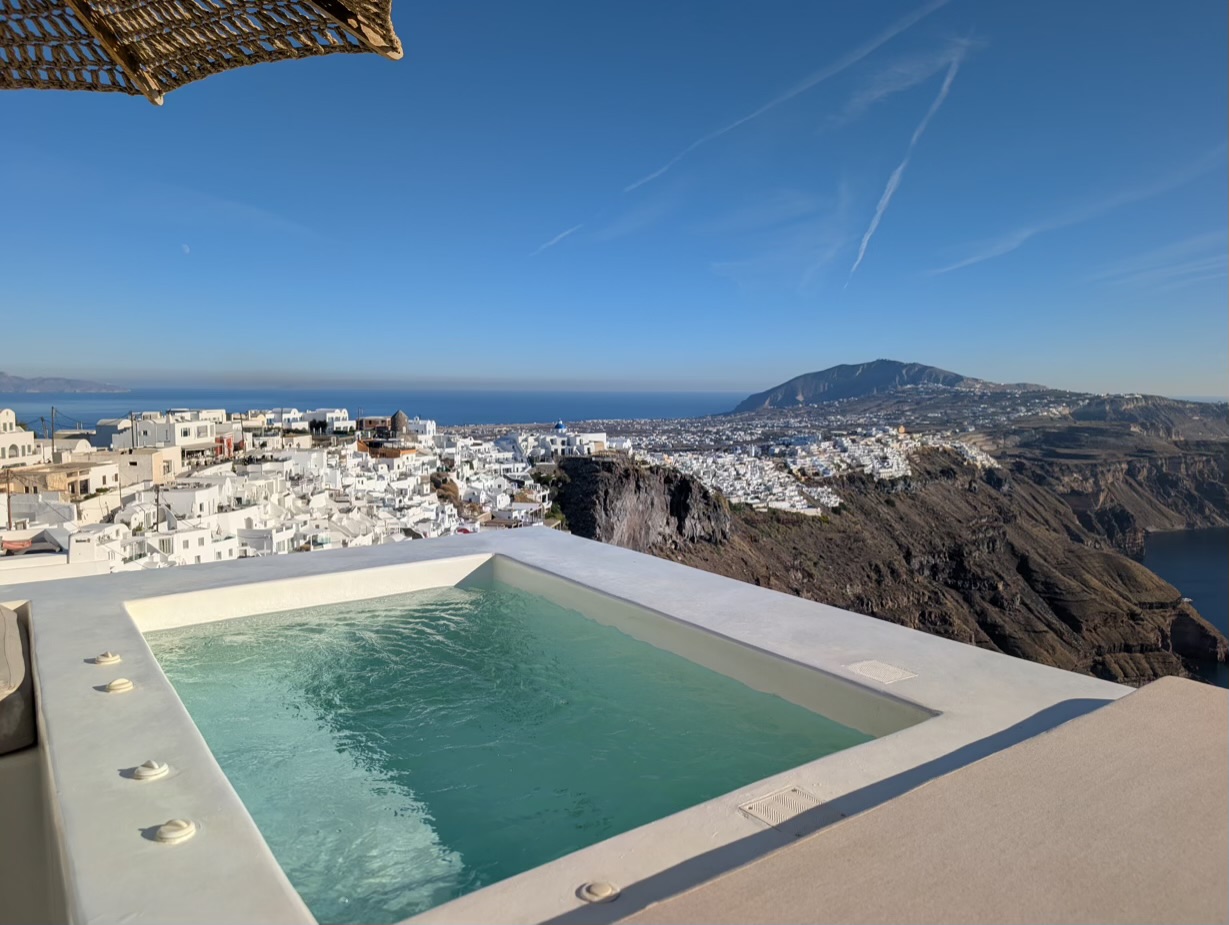
Santorini is one of Greece’s most iconic islands, famous for its whitewashed houses, blue domed churches and spectacular caldera views. But beyond the picture perfect scenery, there’s plenty to explore, from traditional villages and coastal walks to delicious Greek food and boat trips along the volcanic coastline.
I’ve visited Santorini twice, first in mid-June and more recently in late October. Experiencing the island at different times of year showed me how much the weather and crowds can affect your trip.
If you’re planning your first visit, choosing when to go and where to stay can make a big difference. In this guide, I’ll share what I learned from both trips, including the best time to visit Santorini, where to stay for different budgets and travel styles, the best things to do and how to get around.
When to Visit Santorini
Choosing when to visit Santorini will have one of the biggest impacts on your trip. The best time depends on what matters most to you.

July–August: Peak Season
Unless you’re tied to the school summer holidays, I’d avoid visiting Santorini in July or August. These are the busiest and most expensive months, and the crowds can take away from the experience, particularly in popular places like Oia and Fira.
May–June and September–Mid-October: The Main Season
These months offer a good balance of warm weather and a lively island atmosphere. However, don’t underestimate the heat, especially in June and September. That’s what I did on my first trip, visiting in mid-June. With so much walking up and down hills and steps, I found exploring during the middle of the day exhausting.
These months are also popular, so don’t expect to have the island to yourself. I’d only choose this period if you’re looking for hot weather and want to enjoy swimming in the sea.
Second Half of October: End of the Season
This is my pick if your priority is exploring Santorini in a quieter atmosphere without sacrificing too much warmth. The second half of October falls towards the end of the main tourist season, so you’ll generally encounter fewer visitors than in summer.
During my five day visit in late October, temperatures stayed around 21–23°C. I was lucky enough to have no rain, although showers are possible at this time of year. There were more clouds than I’d experienced in June, but the sunshine was still strong, and it was warm enough to enjoy exploring the island comfortably.
The main trade offs are less predictable weather and cooler sea temperatures, which can make swimming less appealing. During the last week of October, you’ll also notice the island starting to wind down, with some less popular restaurants closing and fewer tours on offer. However, there’s still plenty to see and do before November.

April: Start of the Season
April is a good alternative if you want to explore Santorini without the summer heat. Daytime temperatures are generally cooler, around 16°C, but the days are getting longer, giving you plenty of daylight to explore. You can still expect some rain, but April is generally drier than the autumn months.
The main downside is the sea temperature. After winter, the water is cold, so swimming may not be possible.
November–March: Outside of the Season
Santorini remains accessible during winter, but much of its tourist infrastructure closes. Most hotels and restaurants shut down, organised tours become very limited, and direct flights from European cities, apart from Athens, are no longer available.
My recommendation: Visit in April for cooler exploring conditions or in the second half of October for a chance of warmer weather and fewer crowds. If spending time on the beach and swimming in the sea are important to you, visit during the main season, but avoid July and August if possible.
How to Get to Santorini

The easiest way to get to Santorini is by plane. You can fly directly from many European cities during the main tourist season or connect through Athens.
Alternatively, you can take a ferry from Athens, although the journey takes around 5–8 hours, depending on the ferry. It won’t necessarily save you much money compared with flying, so I’d choose this option if you enjoy travelling by ferry or want to include the journey as part of your trip.
If you’re visiting other Greek islands, you can also travel to Santorini by ferry from several neighbouring islands, making it easy to combine Santorini with other destinations in the Cyclades.
How Long to Stay
The answer really depends on what you want to do. If your goal is to explore the island, I’d recommend at least 4–5 days, including travel days.
If you want to fit in more activities or spend more time relaxing by the pool or on the beach, I’d plan a week for your trip. Santorini is a relatively small island, so I wouldn’t recommend spending more than 10 days there. If you have more time, consider combining Santorini with one of the nearby Greek islands for a more varied trip.
How to Get Around
Once you arrive on the island, there are three main ways to get around: buses, rental vehicles and taxis. You can rent a car, scooter or ATV, depending on your preferences and driving experience.
Buses

Buses are by far the most affordable way to travel around the island. A one-way ticket costs around €2–3, depending on the route.
There are, however, a few challenges to keep in mind. Firstly, all buses start and end in Fira. This means that if you’re staying outside the island’s capital, you’ll often need to change buses in Fira to reach your destination.
Some of the less popular parts of the island are also difficult to reach by bus. For example, if you want to visit a restaurant outside the main villages for dinner, getting there and back can be challenging.
Finally, buses on popular routes can get very crowded, especially during peak season, and you cannot book tickets in advance. Relying entirely on buses during the busiest months can therefore require some patience and flexibility.
Renting a Vehicle
Renting a vehicle is the most convenient way to explore the island at your own pace. Although you can rent a scooter or ATV, Santorini’s roads can be narrow and winding. If you’re not experienced with these vehicles, I’d recommend choosing a car for safety reasons. Ideally, opt for a small car that’s easier to drive and park.

Parking in popular villages can be challenging, so you might need to park further away or spend some time looking for a space. For this reason, taking the bus can be more convenient when visiting places like Fira.
If you’re looking for a reliable and affordable car rental company, Car4U is one option worth considering. I’ve rented from them twice and never had any problems. You can collect your car at the airport or arrange for it to be delivered to your hotel for an additional fee.
Taxis
Taxis in Santorini can be expensive, so costs can add up if you rely on them for every journey. If you don’t want to rent a vehicle, I’d use taxis mainly for transfers to and from the airport, then rely on buses for other journeys where possible.
Organised tours can also be a convenient option, as some providers include transfers in the price.
My recommendation: If you’re a confident driver, I’d rent a car for your entire stay to give yourself the most flexibility. If you’d prefer to save some money, you could rent a car for a couple of days to explore the island’s less accessible areas, then rely on buses and organised tour transfers for the rest of your trip. If you rent a car, make sure to check the parking situation at your accommodation before booking.
Where to Stay in Santorini
Choosing where to stay is an important decision. Although Santorini is a relatively small island, its villages offer very different experiences. The main choice is between the famous caldera villages with their spectacular views, quieter inland villages with more affordable accommodation, and seaside villages with easy access to the beaches.

Caldera Villages
Oia
Oia is the most famous village in Santorini and the place where many of the island’s most iconic photos are taken. However, its popularity comes with some significant disadvantages.
First, it’s one of the most expensive places to stay on the island. Secondly, it gets very busy, especially around sunset, when visitors from across the island gather to watch the sunset. Finally, Oia is located at the northern tip of Santorini, meaning you’ll spend more time travelling if you want to explore the rest of the island.
For these reasons, I wouldn’t recommend staying in Oia, even during the shoulder season. I’d rather visit for the day and stay somewhere more convenient for exploring.
Fira
Fira is the island’s capital and one of its busiest villages. Although it might not be as iconic as Oia, its elevated position along the caldera offers sweeping views over the sea and neighbouring villages.
It’s also one of the most convenient places to stay if you’re relying on public transport, as all bus routes start and end in Fira. It’s a good choice if you want caldera views, easy access to transport and a lively atmosphere, with plenty of restaurants and shops nearby.
Imerovigli

Imerovigli is my favourite place to stay in Santorini. It’s located even higher than Fira, offering spectacular views of the caldera. You can also walk to Fira in around 30 minutes along a scenic path that follows the caldera.
It’s also quieter than Fira and Oia, making it a great choice if you’re looking for somewhere peaceful to relax.
If you’re booking a room specifically for sunset views, keep in mind that some parts of Imerovigli face south and don’t offer direct sunset views. I’d recommend confirming the view with your hotel before booking if this is important to you.
During my second, shorter trip, I splurged on a stay at Cilion Suites, which offers spectacular views and private hot tubs. Although it’s an expensive property, I’d highly recommend it for a shorter stay if you want to treat yourself to a special experience.
Firostefani
Firostefani is located between Fira and Imerovigli. It’s more peaceful than Fira, while still being within easy walking distance of the capital’s busy streets.
It’s a solid option if you want a compromise between Fira’s convenience and Imerovigli’s quieter atmosphere.

Inland Villages
Santorini isn’t just about the caldera villages. There are plenty of inland villages where you can stay at more affordable prices.
Pyrgos is a particularly good option if you want a traditional village atmosphere and elevated views thanks to its hilltop location. In other, less well known villages, you’ll generally trade the spectacular views for lower accommodation prices.
These villages are particularly convenient if you’re renting a car. Centrally located options such as Messaria and Karterados can make a good base for exploring different parts of the island. Many hotels offer parking, so you won’t need to worry as much about finding a space. During my first trip, I stayed at Arlene Suites in Messaria, which was a great affordable base for exploring the island.
Inland villages are also worth considering if you’re looking for a bit of luxury without paying caldera prices. During that same trip, I finished my stay with three nights at Azanti Suites in Megalochori, where I could enjoy a private pool and spectacular views.
Seaside Villages
If spending time at the beach is important to you, consider staying in Perissa or Kamari. Both are located on the eastern side of the island and offer long, wide stretches of black volcanic sand. However, you’ll be further away from some of Santorini’s most famous caldera views.
My recommendation: If you’re planning a longer trip and want to experience iconic Santorini without breaking the bank, consider splitting your stay between two properties. Choose a more affordable inland village as a base for exploring the island, then spend a couple of nights in a more luxurious caldera hotel at the beginning or end of your trip.

Best Things to Do in Santorini
Although the island is small there is plenty to do. The activities can be split into the following categories.
Exploring Villages
With so many beautiful villages, you need to dedicate a good amount of time to exploring the main ones.
Start with Fira, the capital, where you can wander through narrow streets filled with shops, cafés and restaurants. Some of the most stunning views can be found along the caldera path, which runs all the way to Imerovigli. It’s definitely worth walking at least as far as Firostefani. If you continue beyond Imerovigli, you can hike all the way to Oia. This is the most famous hike in Santorini (see more details below).
If you’re visiting when sunset coincides with dinner time, it’s worth treating yourself to a sunset dinner in Fira. It will be a little more expensive, but the views make it a beautiful experience. Aris Restaurant is one option to consider. Alternatively, you can stop for a drink or coffee at one of the cafés overlooking the caldera, such as Iriana Café.

Oia deserves a separate visit, too. If you’re visiting during high season, try to avoid the village at sunset, when the streets become extremely crowded. Oia is full of iconic spots you might recognise from famous Santorini photos. It’s also worth walking down to Ammoudi Bay for lunch or stopping for a drink or a small snack at Cool Cave. Just bear in mind that you’ll need to climb almost 300 steps to get back up to Oia. This is one reason why visiting outside the hottest months can be a real advantage.
Beyond the caldera villages, it’s worth exploring the inland villages of Pyrgos, Emporio and Megalochori. They’re all relatively small, so you can comfortably visit all three in one day. Each has its own character. Pyrgos sits on a hill and offers spectacular views across the island. Emporio will charm you with its labyrinth of extremely narrow streets, while Megalochori has several unique artisan shops and a traditional cave house that you can visit for free.
Boat Tours
A boat tour is always a nice way to spend time when visiting an island, but this is especially true in Santorini. From the water, you can admire the island’s stunning cliffs, with villages perched high above the sea, from a completely different perspective.
There are two main types of boat tours to choose from.
Large boat tours
These tours usually take you to the volcano, the hot springs and Thirassia Island. At each stop, you get off the boat and explore on foot.

Tickets typically cost around €30–40 per person. Food, drinks and hotel pick-up are usually not included. Most tours depart from the old port below Fira.
Catamaran tours
If you’re looking for a more relaxing experience, I’d recommend a catamaran tour. These tours have fewer people on board and include several swimming stops, although you won’t get off the boat to explore the places you visit. Food, drinks and hotel pick-up are typically included, with prices at around €100 per person.
I’d especially recommend Vista Yachting. I’ve joined their tours twice and had an amazing experience both times. The staff were very attentive, and the food was delicious. They also provide towels, snorkelling equipment and blankets for cooler evenings.
Catamaran tours typically depart from the south of the island or Oia. They cover more of the coastline, allowing you to see the famous Red and White beaches from the water, as well as the Akrotiri lighthouse.
You can usually choose between a morning cruise and an afternoon sunset cruise. The morning option is best if swimming is your priority, while the afternoon cruise offers a more romantic experience, with sunset views over the sea.
Hiking
While hiking might not be the first thing that comes to mind when thinking of Santorini, the island is a great place for walks with stunning views.
By far the most famous route is the hike from Fira to Oia, which follows the caldera. The total distance is around 10.5 km, with a little over 300 m of ascent. It can be completed in 3-5 hours depending on your fitness level and how often you stop to enjoy the views.


The initial section between Fira and Imerovigli offers some shade, but most of the remaining trail is exposed to the sun. I completed the hike both in mid-June and in late October, and found the latter much more enjoyable. In hot weather, it’s best to start very early to avoid the strongest sun.
Beyond Imerovigli, there are few places to stop for refreshments, so make sure you carry enough water. There are some stands along the way, but they’re not always open. Once you reach Oia, you can take a bus back to Fira.

You can also hike the route in reverse, from Oia to Fira. However, this involves more climbing, with over 400 m of ascent. There are signs along the initial section between Fira and Imerovigli to help you follow the right path. Beyond Imerovigli, the route is much more straightforward, and you can see your destination for most of the way.
Although the hike isn’t particularly easy due to the elevation changes, especially in hot weather, the views along the entire route make it well worth the effort.
There are also several other hikes to consider in Santorini. You can hike around the volcano as part of a boat tour, walk from Pyrgos to Profitis Ilias Monastery, or visit Skaros Rock from Imerovigli. The walk to Skaros Rock can also be added to the Fira to Oia hike, but allow around an extra hour for it.
Beaches
Santorini isn’t really a beach destination, so I’d prioritise the caldera, hiking and boat trips. If you want to spend some on the beach, Perissa and Kamari are the best options, with long stretches of black volcanic sand on the east coast.

Historical Sites
There are also a couple of archaeological sites worth visiting in Santorini. The best known is the Akrotiri Archaeological Site. This prehistoric Bronze Age settlement was buried by a volcanic eruption, preserving buildings, streets and evidence of an advanced civilisation. Allow around 1–2 hours for your visit. A ticket costs €20.
The second major site is Ancient Thera, the remains of an ancient city built high on a mountain between Kamari and Perissa. You can explore the ruins of temples, a theatre, public buildings and sanctuaries, while enjoying impressive views across the island. Tickets cost €10.
There are also a couple of museums where you can learn more about Santorini’s history and see archaeological finds from the island.
Wine Tours

Santorini has a long wine making tradition and is particularly famous for its white wines. During your visit, you can enjoy local wines with your meals or join a winery tour to learn more about wine production on the island.
Santo Wines, located near Pyrgos, is one of the island’s best-known wineries. Its spacious terrace overlooks the caldera, making it a particularly attractive place for a tasting around sunset. A winery tour costs around €15, while wine tastings range from €35 to €45, depending on how many wines you want to try. You can also pay extra for food to accompany your tasting.
Another good option is Venetsanos Winery near Megalochori. Built into the cliffside, it combines a historic setting with beautiful caldera views, making it another great place to sample local wines.
Adventure Tours
There are also a number of adventure activities to try in Santorini. For example, you can join a jet ski safari along the island’s southern coastline, passing landmarks such as Red Beach, White Beach and the lighthouse. Other options include sea kayaking, scuba diving and parasailing. These activities are a great way to explore a different side of Santorini, especially if you’re looking for something more active than the usual sightseeing.
Cooking Classes
If you want to learn more about Greek cuisine, you can join a cooking class and learn how to prepare traditional dishes using local ingredients. Many experiences also include wine tasting or a meal where you can enjoy the food you’ve prepared. It’s a great option for food lovers looking for something different from sightseeing.
Where to Eat in Santorini

No trip to Greece would be complete without enjoying its delicious food. Although Santorini is a popular destination, there are plenty of excellent restaurants where you can eat well for a reasonable price.
Unfortunately, many of the best affordable restaurants are located outside the main villages and aren’t always easy to reach by bus. For this reason, renting a car is a good idea if you want to visit some of my favourite restaurants in Santorini.
Many of these restaurants don’t offer sunset views or caldera side dining. However, that’s the trade-off for enjoying delicious, authentic local food. During high season, it’s best to book restaurants 1–2 weeks in advance to avoid disappointment.
Metaxi Mas
Metaxi Mas is a traditional tavern in Exo Gonia serving Santorinian and Cretan cuisine. Guests are welcomed with local delicacies to try, and the restaurant has a lovely outdoor seating area with nice views thanks to its elevated location. During the cooler months, outdoor heaters make it comfortable to eat outside on chilly evenings.

The Good Heart
The Good Heart is a traditional, family run tavern on the way to the Akrotiri lighthouse. The owners make several of their own products, including tomato paste and wine. The portions are generous, and the prices are very reasonable. I’d recommend trying the beef stew with eggplant purée, made with Santorini’s white eggplant.
The Cave of Nicholas
The Cave of Nicholas is a fish tavern next to the Akrotiri Archaeological Site. Located right by the water, it serves freshly caught fish alongside meat and vegetarian dishes. The outdoor seating beside the sea creates a lovely atmosphere. Aside from the delicious fresh fish, I’d recommend trying their dakos salad, made with crunchy rusk bread, tomatoes, feta and olives.
Fratzeskos
Another great family-owned fish tavern is Fratzeskos in Perissa, located right by the beach. It has casual beachside seating and is known for its fresh seafood. It’s a great place to visit if you’re planning to spend some time at Perissa Beach.


Lucky’s Souvlakis
If you’re looking for a quick and casual bite, you must try souvlaki while in Greece. It’s made with marinated, grilled meat served in a wrap with fries, tomato, onion and tzatziki sauce.
Lucky’s Souvlakis in Fira is a great place to try it. When I visited, a delicious wrap cost just €5, making it an affordable option for lunch while exploring the capital.
Other Restaurants
There are also plenty of good restaurants in Santorini’s more popular villages, so you can still eat well without driving further afield or renting a car.

For example, Avocado in Imerovigli serves tasty Mediterranean cuisine and is a good option if you’re staying in the area and don’t want to travel elsewhere for dinner.
Final Thoughts
Santorini is a beautiful island, but when you visit and where you stay can make a big difference to your experience. If you want to explore comfortably without the biggest crowds, I’d particularly consider the second half of October. If warm weather and swimming matter more, I’d choose June or September.
I’d also recommend looking beyond Oia. Fira is a good choice if you want to explore the island and rely on buses. If you want caldera views, Imerovigli is a great option. It’s much quieter than Fira, but still within walking distance. The inland villages offer a different side of Santorini and more affordable accommodation.
Make sure to include a boat trip and a walk along the caldera in your itinerary. Both give you a chance to appreciate the island beyond its famous viewpoints.
With four or five days, you can experience most of Santorini’s highlights without rushing. If you want to fit in more tours and activities, though, I’d recommend allowing a full week.
Leave a Reply