
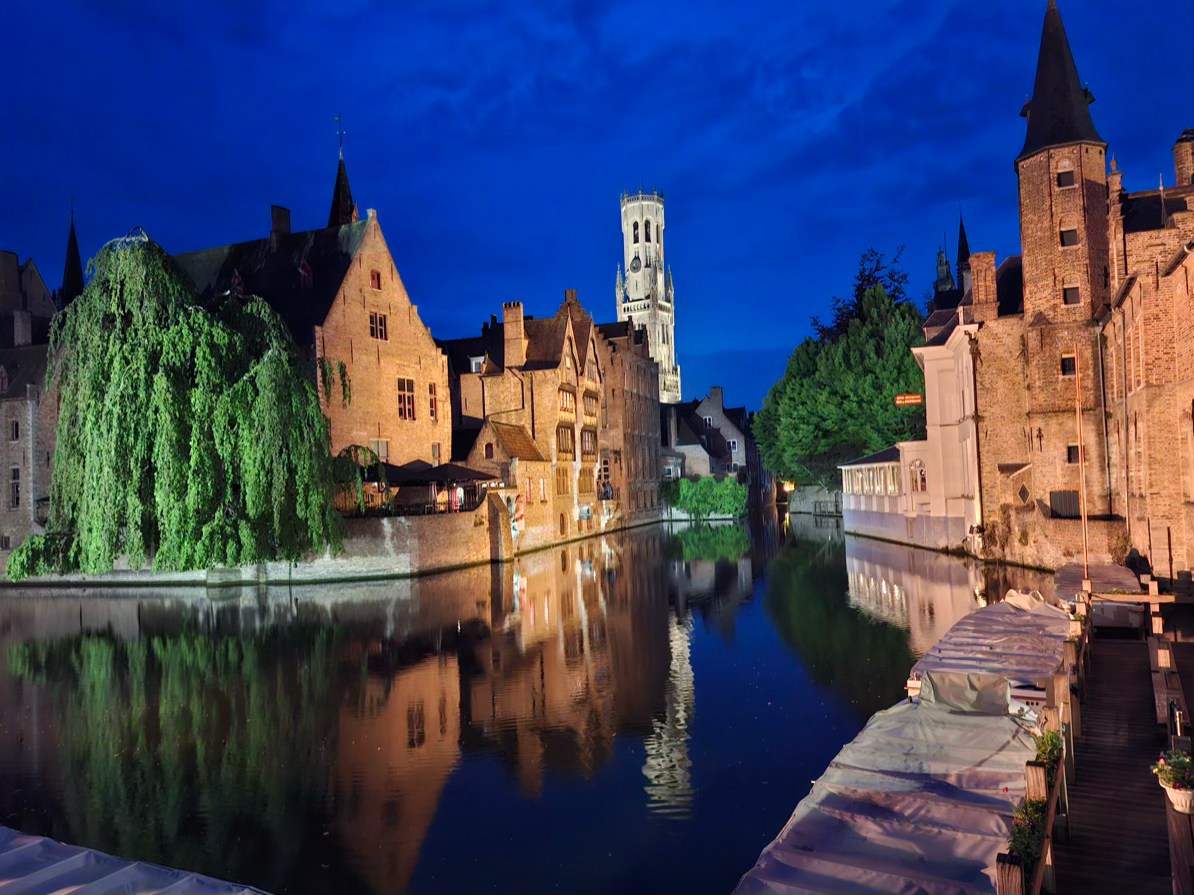
Belgium is a small European country that often flies under the radar, but it has a lot to offer. While it’s best known for hosting the EU headquarters in Brussels, its real charm lies in its medieval cities, scenic canals, and Renaissance architecture.
What makes Belgium especially easy to explore is its excellent train network. With frequent connections and short travel times, you can visit several cities in just a few days, making it perfect for a short European city break.
This 3 day Belgium itinerary covers Bruges, known as the “Venice of the North” for its canals, Ghent, famous for its well-preserved medieval architecture, and finally Brussels, the vibrant capital of Belgium.
This guide also includes accommodation suggestions, places to eat, and key activities in each city to help you plan your trip with ease.
Day 1: Bruges — A Fairytale City

Getting to Bruges
Most travellers arrive in Brussels by plane or train before continuing on to Bruges. From Brussels, a local train takes around an hour, with frequent departures throughout the day, making it an easy first stop on any Belgium itinerary. Tickets can be purchased online at https://www.belgiantrain.be/en and are usually valid for the entire day, so there’s no need to choose a specific departure time.
Once you arrive, the historic city centre is about a 20-minute walk from the train station, offering a first glimpse of Bruges’ quiet streets and canal-lined scenery.
Accommodation
Bruges has plenty of charming stays near the centre, but Guesthouse Bonheur stands out for its character, history, and location. Set in a former artisan blacksmith family home, it blends traditional architecture with modern comfort while preserving its historic charm.
The guesthouse is only a short walk from the main square but sits on a quiet street, making it a peaceful base after a day of exploring. Rooms are around £150 per night for two people, offering good value for the area. Direct bookings are available via email, or you can reserve through Booking.com.


Food and Drink
House of Waffles
Belgium is known for its food culture, and Bruges is a great place to experience it. A natural first stop is House of Waffles, where you’ll find both sweet and savoury options, perfect for a quick bite while exploring the city. You can order takeaway or sit inside or in their small outdoor seating area.
Restaurant Diligence
For dinner, Restaurant Diligence is a strong choice for traditional Belgian dishes such as beef stew or vol-au-vent, paired with local beers. The restaurant is set in a historic building and is also known for appearing in the film In Bruges, which adds to its atmosphere. Reservations are recommended due to its popularity.


Exploring Bruges
Canal Boat Tour
One of the best ways to experience Bruges is from the water. The canals offer a completely different perspective of the city, revealing hidden corners and historic buildings you don’t always notice on foot. Boat tours run from March to mid-November, with winter availability depending on weather conditions. All operators charge around €15 per person and follow the same route, with tours lasting approximately 30 minutes.
Most departures are located near Rozenhoedkaai, one of the most photographed spots in Bruges. Waiting times can vary, but boats hold up to 40 passengers, so queues move fairly quickly. It’s worth the short wait, as seeing Bruges from the water is one of the highlights of the visit.
Walking Bruges’ Historic Centre
Bruges is best explored on foot, as the city feels designed for wandering rather than planning. Start at Market Square, home to the Belfry, a medieval bell tower that you can climb for panoramic views over the city. Tickets cost €16 for adults, and while the climb is narrow and steep, the view from the top is a rewarding way to see Bruges from above.
From there, continue to Rozenhoedkaai for classic canal views before heading north past the fish market into the quieter Sint-Anna Quarter. This area is often missed by visitors but offers a more peaceful, local side of Bruges.
It’s also worth leaving the map behind at times and simply wandering, as many of the most beautiful streets appear unexpectedly. After sunset, the city transforms completely, the crowds fade, the lights reflect on the canals, and Bruges becomes even more atmospheric than during the day.


Day 2: Bruges to Ghent — Medieval Charm
Food and Drink
That’s Toast

For brunch in Bruges, you can’t miss That’s Toast. It’s one of the city’s highest-rated brunch spots, known for its original and genuinely tasty toast dishes. I was slightly sceptical about whether it would live up to the hype, but it ended up exceeding expectations.
The restaurant doesn’t take reservations, so there’s usually a short wait, especially on weekends. Luckily, there are plenty of tables and the queue moves quickly. During my visit on a busy weekend in May, the wait was only around 10–15 minutes.
They also serve creative desserts, and the dishes are reasonably priced considering the quality and portion sizes.
Exploring Bruges
In my opinion, Bruges is the most beautiful city of this trip, so it’s worth dedicating more time on day two to explore parts of the city you may not have had time for on day one.
Minnewater and the Beguinage
Start with a walk around Minnewater, also known as the Lake of Love, and the nearby Minnewater Park located just south of the historic centre. It’s one of the most peaceful and romantic parts of Bruges, perfect for a slower morning stroll.
While in the area, it’s also worth visiting the Beguinage, a historic complex where religious women once lived. The site is made up of white-painted houses and a church surrounding a quiet courtyard lined with tall trees.


Brouwerij De Halve Maan
No trip to Belgium feels complete without visiting a brewery. Bruges has three breweries within the historic centre, with Brouwerij De Halve Maan being the largest and most well known. The brewery has been producing beer for six generations and, since 2016, its beer has been transported through a 3 km underground pipeline to a bottling plant outside the city.

You can visit the brewery just for a tasting, but if you want to learn more about its history and brewing process, guided tours are available. Tours cost €16, last around 45 minutes, and include a beer of your choice at the end.
Tours run frequently throughout the day, so booking ahead usually isn’t necessary unless you want to guarantee a specific time slot.
Getting to Ghent
In the afternoon, it’s time to head to the second city of this trip: Ghent. The city is located roughly halfway between Bruges and Brussels, with frequent train connections throughout the day.
Unlike Bruges, Ghent’s main train station, Gent-Sint-Pieters, is located further from the historic centre. If you want to avoid the 30-minute walk, trams T1 and T3 connect the station with the historic city centre in a little over 10 minutes.
Tickets don’t need to be purchased in advance, as you can simply tap your card on one of the white machines inside the tram. A one-way ticket costs €3.

Accomodation
For my stay in Ghent, I chose Yalo Urban Boutique Hotel Ghent, a stylish four-star hotel located on the edge of the historic centre next to a tram stop, making it easy to reach from the train station.
The rooms are modern, comfortable, and fairly spacious, but what stands out most is the hotel’s beautifully designed central restaurant and bar area, which gives the property a lively atmosphere.
A slightly more affordable alternative is B&B HOTEL Gent Centrum, a three-star hotel located within the historic city centre.
Exploring Ghent
Walking in Ghent
By the time you arrive in Ghent and check into your hotel, it will probably already be evening, but there’s still enough time to explore the city centre on foot.
Ghent’s main landmarks include Gravensteen (Castle of the Counts), the Ghent Belfry, St. Bavo’s Cathedral, and St. Nicholas’ Church. Make sure to stop at St. Michael’s Bridge, one of the best viewpoints in the city and a perfect photo spot.
Like Bruges, Ghent is a city best explored by wandering through its narrow streets and canals. After spending time in Bruges, though, Ghent felt noticeably livelier, but also noisier and more chaotic. It’s a much larger city, and that difference becomes obvious as you walk around.
One thing worth noting is that many restaurants in Ghent close on Sundays. During my stay, this made the dinner options rather limited, so it’s something to keep in mind when planning your trip.


Day 3: Ghent to Brussels — Historic Capital
Food and Drink

Lloyd Coffee Eatery
A great brunch spot in Ghent is Lloyd Coffee Eatery, a cosy Belgian café chain that originally started in Brussels before expanding to other cities, including Ghent.
The interiors are spacious and inviting, with a good selection of brunch dishes, coffee, and pastries. We enjoyed it so much that we ended up stopping at one of their branches again later in Brussels.
Exploring Ghent
Ghent Canal Boat Tour
Just like in Bruges, it’s worth seeing Ghent from the water on a canal and river cruise. Prices are consistent across all operators at €11 per adult, and tours typically last between 40 to 50 minutes.
I chose Boat in Gent based on its high reviews and slightly longer tour. The departure point is easy to find thanks to a distinctive yellow umbrella. During high season boats depart every 20 minutes, so there’s usually no long wait.
Tickets can be bought online, but they don’t guarantee a specific departure time, so it’s best to stay flexible.
Getting to Brussels
After the boat tour, head back to Gent-Sint-Pieters train station to catch a train to Brussels. If you plan to explore the city centre, make sure you get off at Brussels-Centraal, which is centrally located (as the name suggests). Be careful not to confuse it with Brussels-Midi, a larger international hub located about a 20 minute walk from the city centre.

If this is your last day in Belgium, you can securely store your luggage at the station in luggage lockers. Prices depend on locker size and are charged per 24 hours.
Exploring Brussels
Although this itinerary focuses mainly on Bruges and Ghent, it would be a shame to pass through Brussels without seeing its main highlights.
Grand Place
Grand Place is the central square of Brussels and is widely considered one of the most beautiful medieval squares in Europe. It is known for its ornate Gothic and Baroque buildings that surround the square.
Royal Galleries of Saint-Hubert
Just a few minutes’ walk from Grand Place, the Royal Galleries of Saint-Hubert are one of the oldest covered shopping arcades in Europe. The elegant glass roof shelters luxury boutiques, cafés, and famous Belgian chocolate shops, making it a great place to stroll through.
Manneken Pis
Manneken Pis is one of Brussels’ most famous landmarks: a small bronze statue of a boy urinating into a fountain. Despite its fame, it often surprises visitors due to its size, as it’s rather small and located on a quiet street corner. It’s worth a quick stop given its proximity to Grand Place, but don’t expect a major attraction.


Royal Palace of Brussels
The Royal Palace of Brussels is about a 15 minute walk from Grand Place. On the way, it’s worth passing through Mont des Arts, which boasts landscaped gardens and panoramic views over the city.
Next to the palace is Parc de Bruxelles, a large public park that’s also worth exploring if you have time.

European Parliament
If you still have time and energy, the European Parliament is another 15 minute walk from the Royal Palace. Visitors can book free guided tours, including access to the Hemicycle, which typically last 1 to 2 hours. Advance registration is required, so it’s best to plan ahead if you want to go inside.
Final Thoughts: The Belgium Trip
Three days in Belgium is enough to explore several very different cities thanks to short distances and efficient train connections. It’s an easy and rewarding way to experience a mix of history, architecture, and atmosphere in a short time. This 3 day Belgium itinerary is a great way to see the highlights without feeling rushed.
Bruges was the clear highlight. Despite being busy during the day, it feels like a fairytale city, especially in the evening. It’s ideal for wandering, but also offers activities like canal cruises and brewery visits that add to the experience. It’s perfect for a slower, more romantic trip.
Ghent came second. It has beautiful historic architecture but feels more lively and urban compared to Bruges. While it’s less atmospheric, it’s a great choice if you prefer a more energetic city.
Brussels was the least impressive overall, with the Grand Place being the main highlight. Outside the centre, the city feels more inconsistent, although the European Parliament area was interesting to visit.
Overall, this is a great short itinerary that lets you experience multiple sides of Belgium in just a few days. If you only have time for one city, Bruges would be my recommendation.